
From label claim to verifiable history
ItalTrack starts from a simple supermarket question: two products may look similar, but the buyer wants to know the real story behind the label. A jar of tomato sauce, for example, passes through farmer, location, processing, storage, distribution, shop or restaurant and consumer-facing verification. The ledger turns that chain into readable events.
The problem ItalTrack solves
Food chains are often managed by isolated systems. Information can remain incomplete, central authorities can slow down controls, and tampering or substitution can be hard to detect. When a problem appears, traceability must identify the lot quickly so that one defective line can be isolated without destroying safe production unnecessarily.
Technical model
ItalTrack is a blockchain based general ledger not controlled by one central authority. Data is encrypted or protected, shared among the participating nodes, validated by the network and stored as immutable transactions. The architecture is expandable through microservices and can receive data from the web platform, mobile apps and IoT devices.
Database and blockchain together
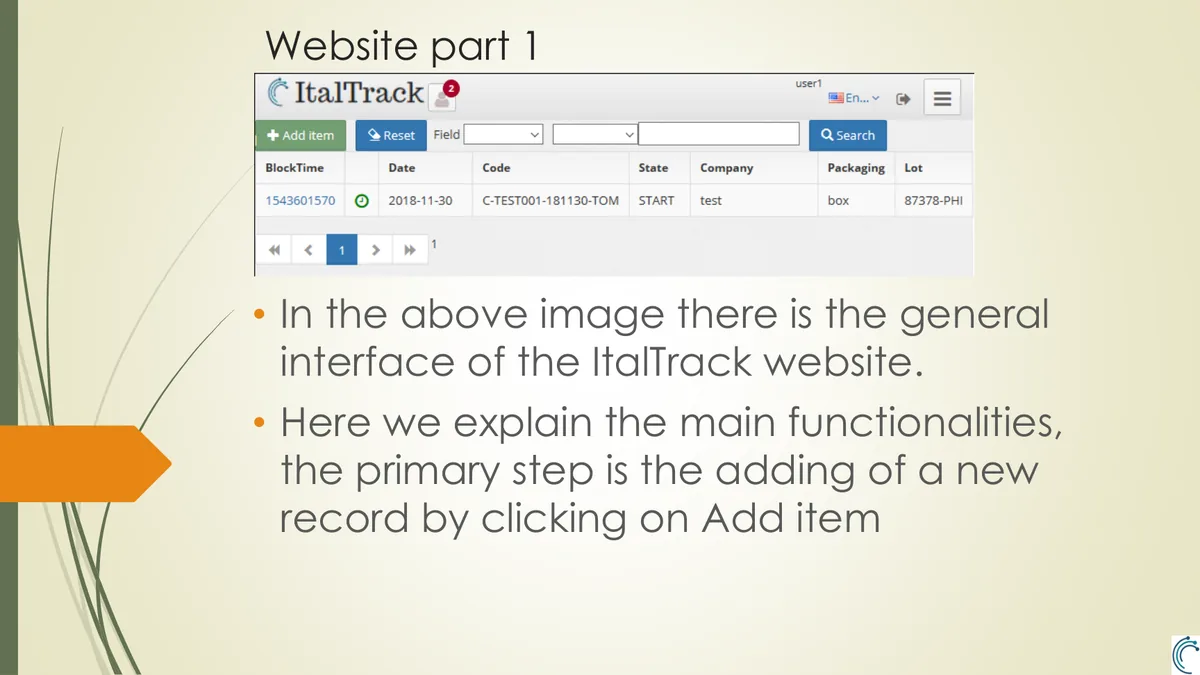
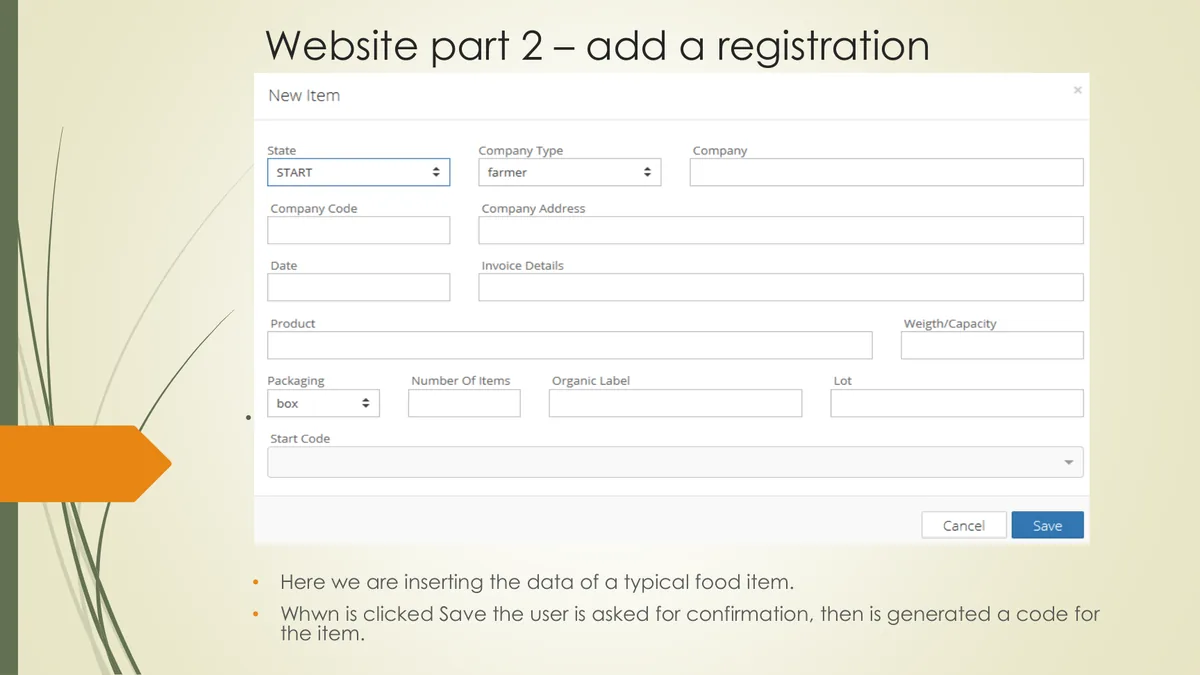
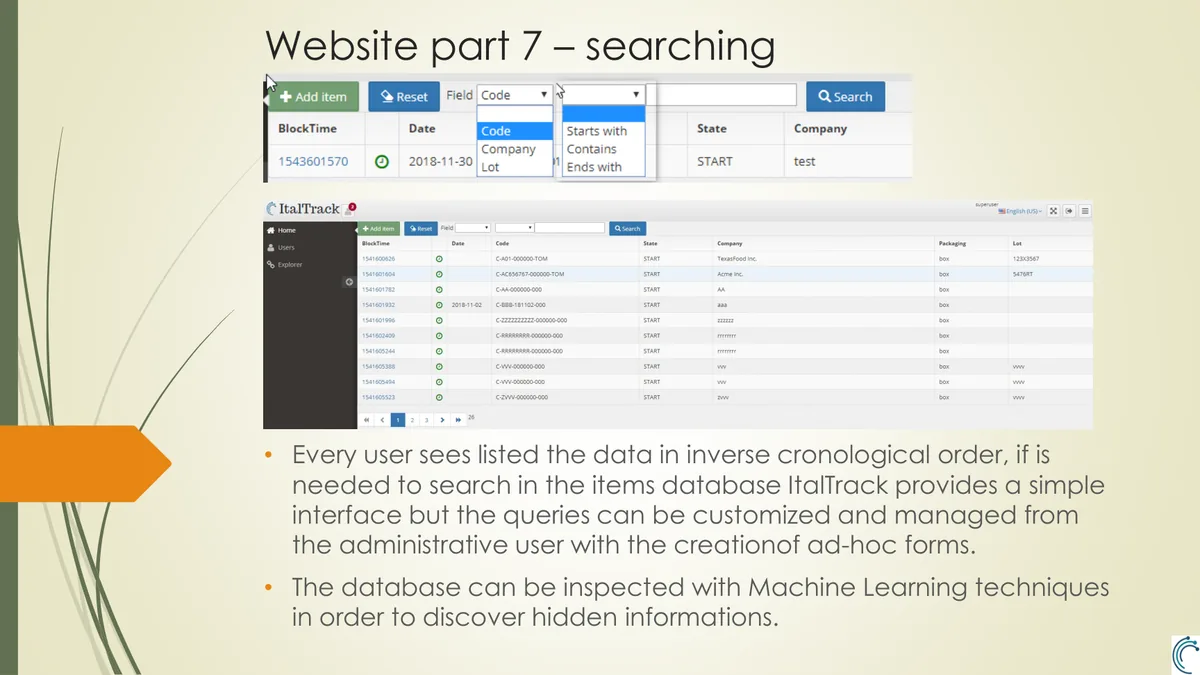
The blockchain is called when a new record is inserted. At the same time, data is mirrored into Postgres so the application can execute complex queries, dashboards and aggregations. The blockchain remains the secure source of truth; the relational layer gives the system practical speed.
Use cases
- Food chain certification from field to shelf.
- QR-based consumer verification of product history.
- Lot isolation after contamination or fraud detection.
- Authenticated dashboards for producers, processors and distributors.
- Machine-learning inspection of hidden inconsistencies.