Practical use case: tomato sauce on a supermarket shelf
The practical use case starts with a consumer facing several brands of the same product. The label says that the tomatoes are organic or that the product is safe, but the consumer needs a way to inspect the product story: where the tomatoes were grown, whether pesticides were declared, when processing happened, where the lot was stored, who distributed it and which shop exposed it for sale.
Correct blockchain application
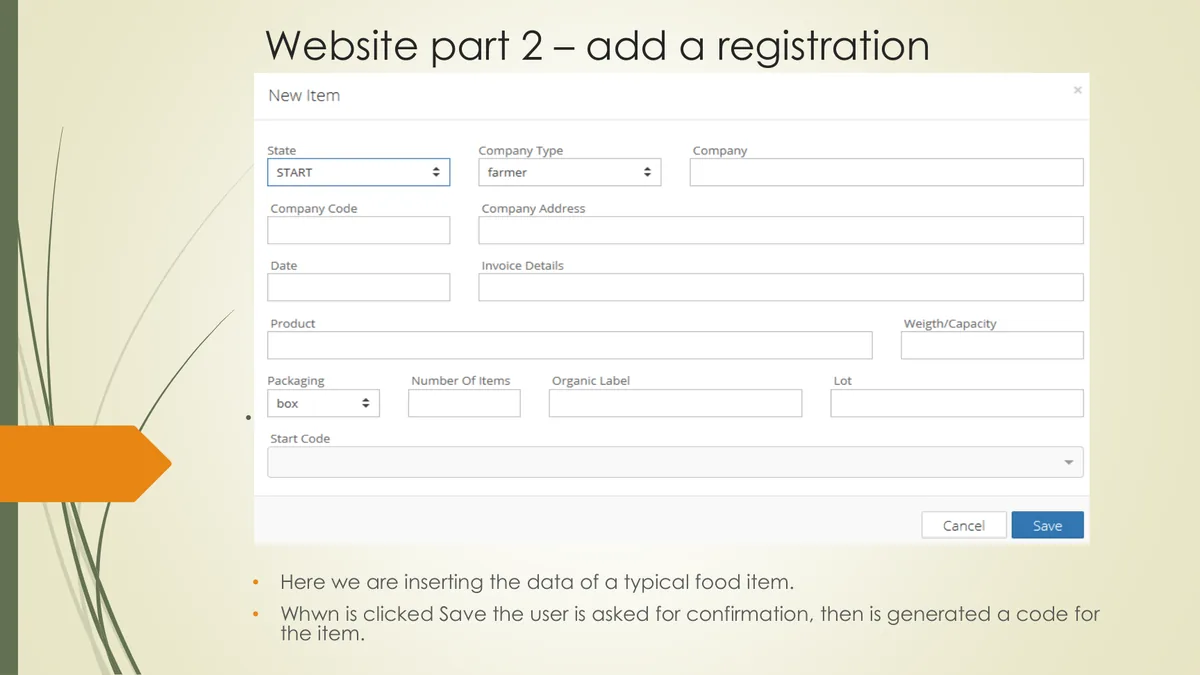
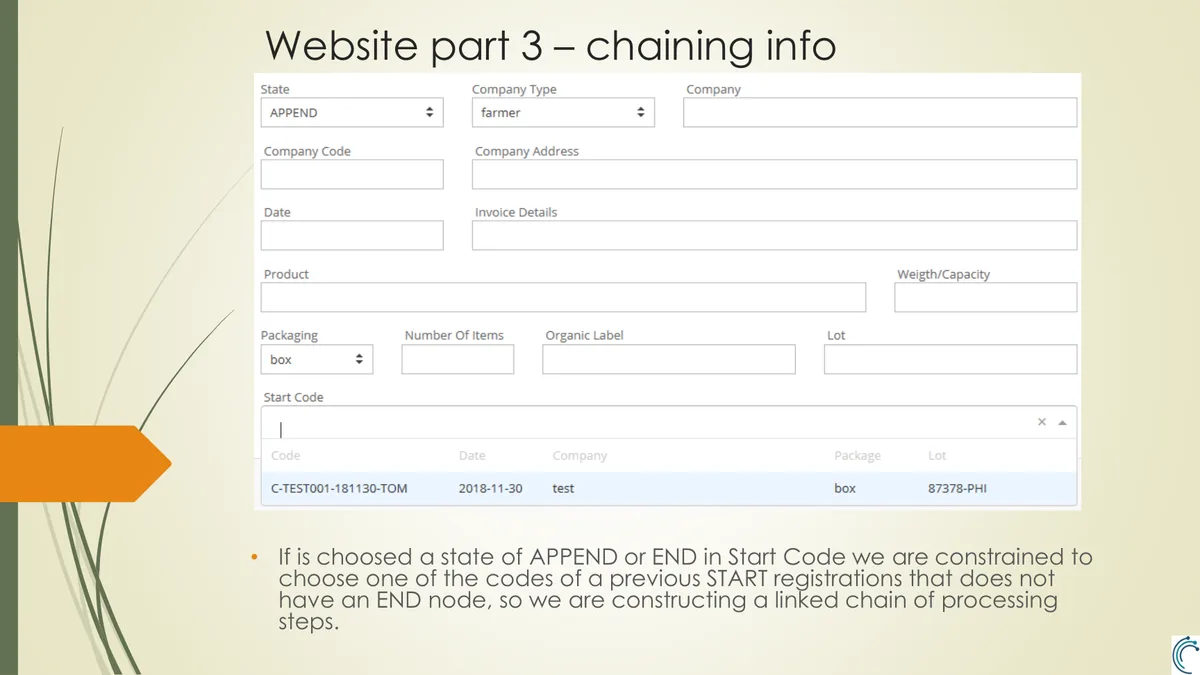
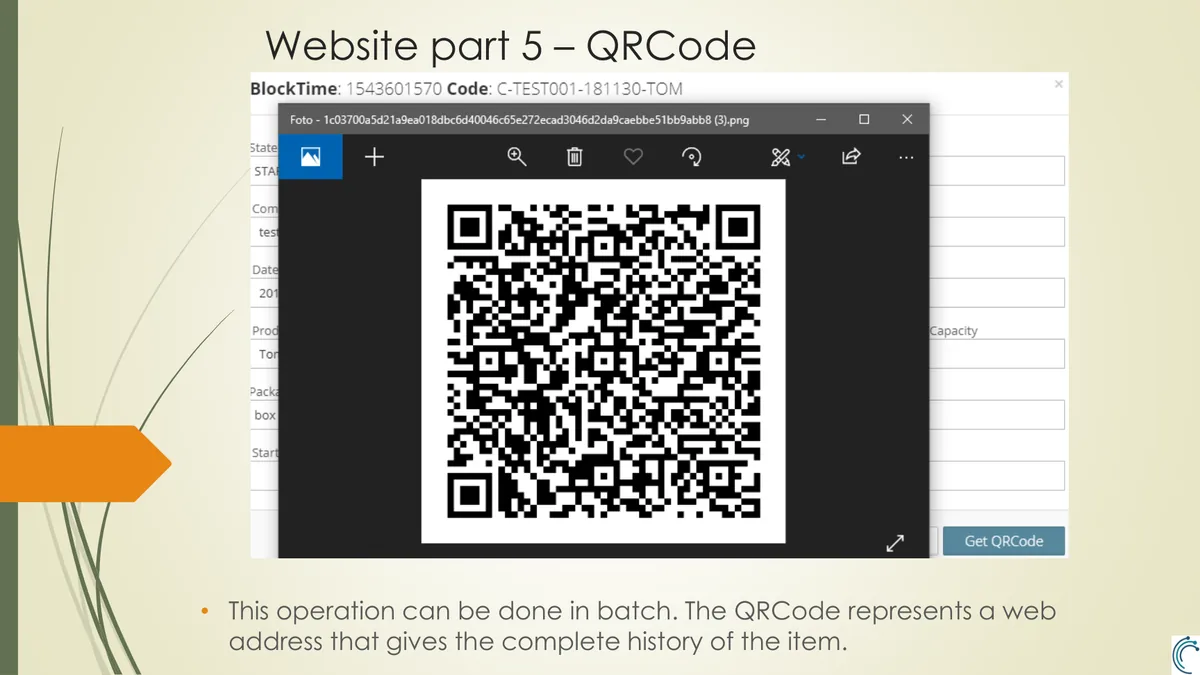
The correct blockchain application is not speculation. It is the creation of an append-only operational record for each event in the product chain. A farmer can register the START record, processors and storage centers can APPEND records, and the final retail or consumption stage can close the chain. A QR code points to the public history of the product while private dashboards preserve sensitive operational data.
Step-by-step flow
The first actor enters the item record and the system generates a code.
Processing, storage and distribution choose the previous open code and add their event.
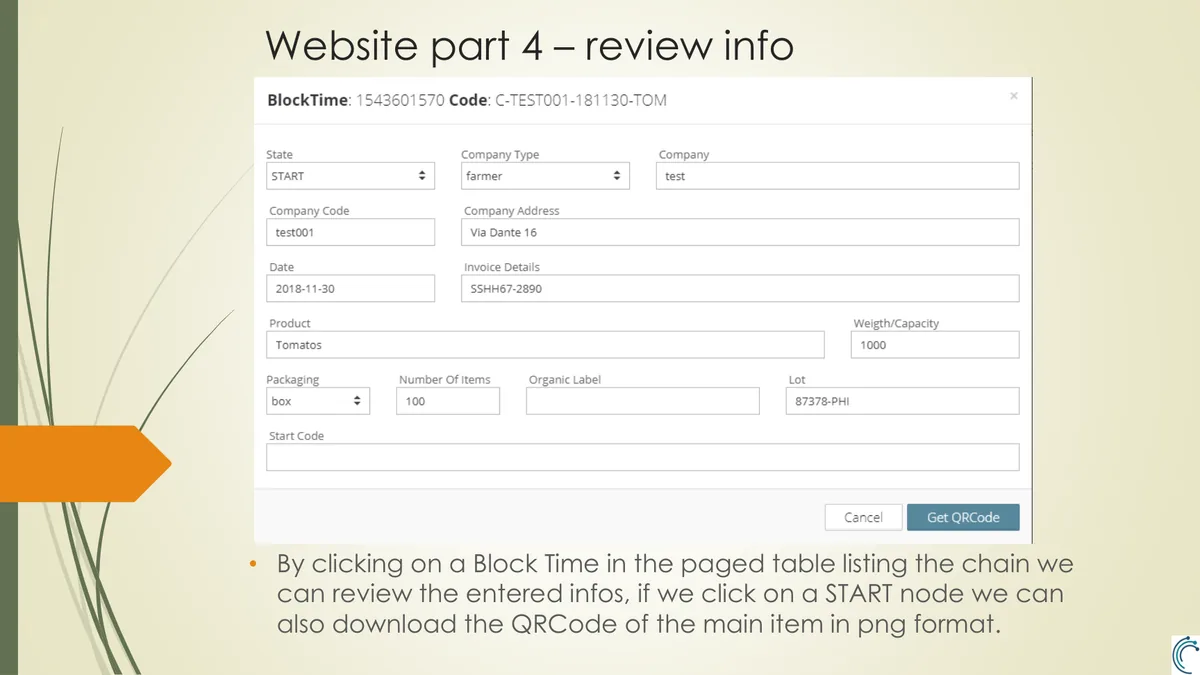
Operators click the block time to inspect entered data and correct through a new event if needed.
The consumer scans the QR code and reads the product story in a supported language.
Why it matters
If a problem appears, the chain can identify the lot and the exact route. This makes recalls more precise, reduces waste and gives quality producers a stronger way to prove what they actually did.