
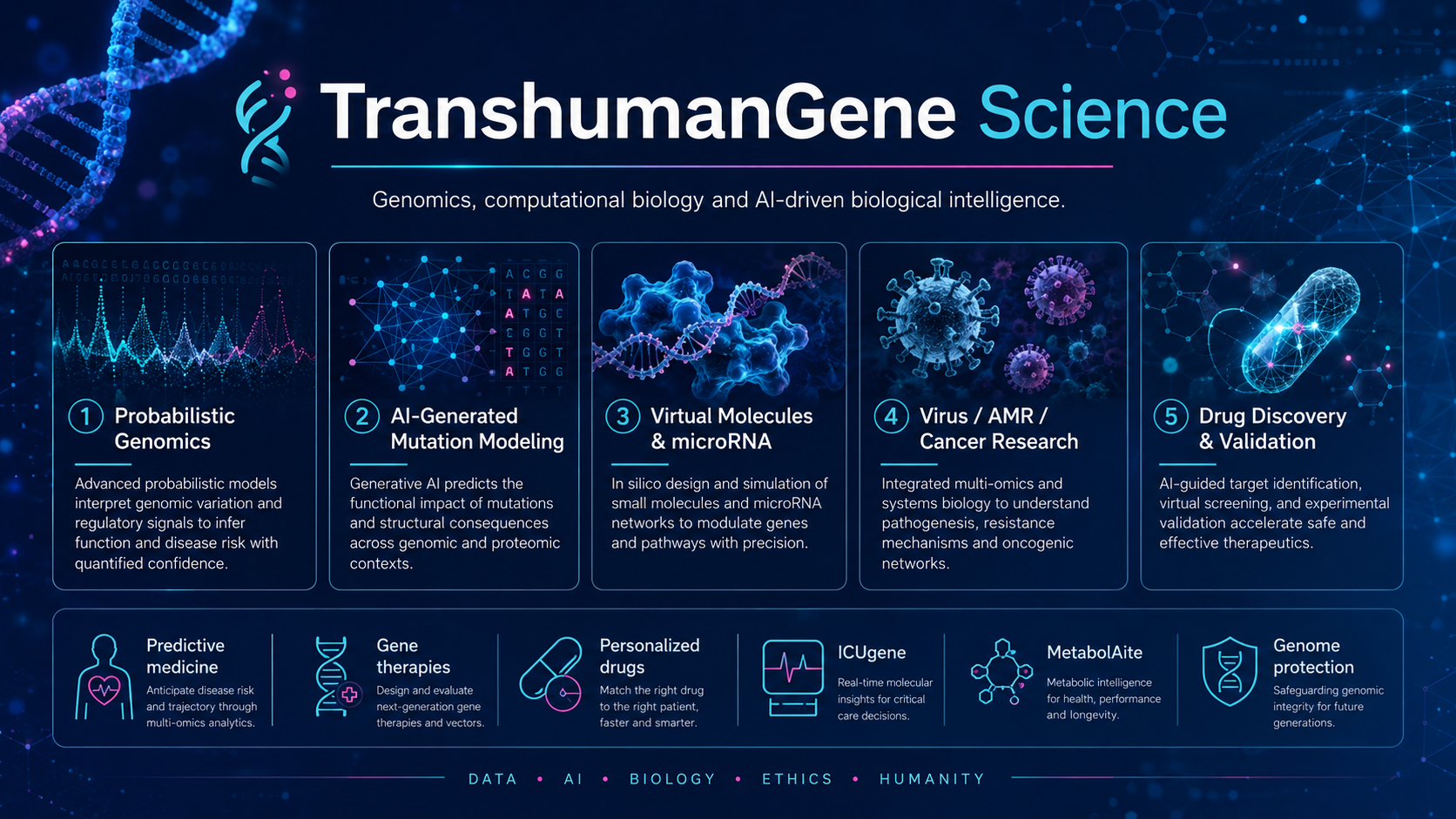
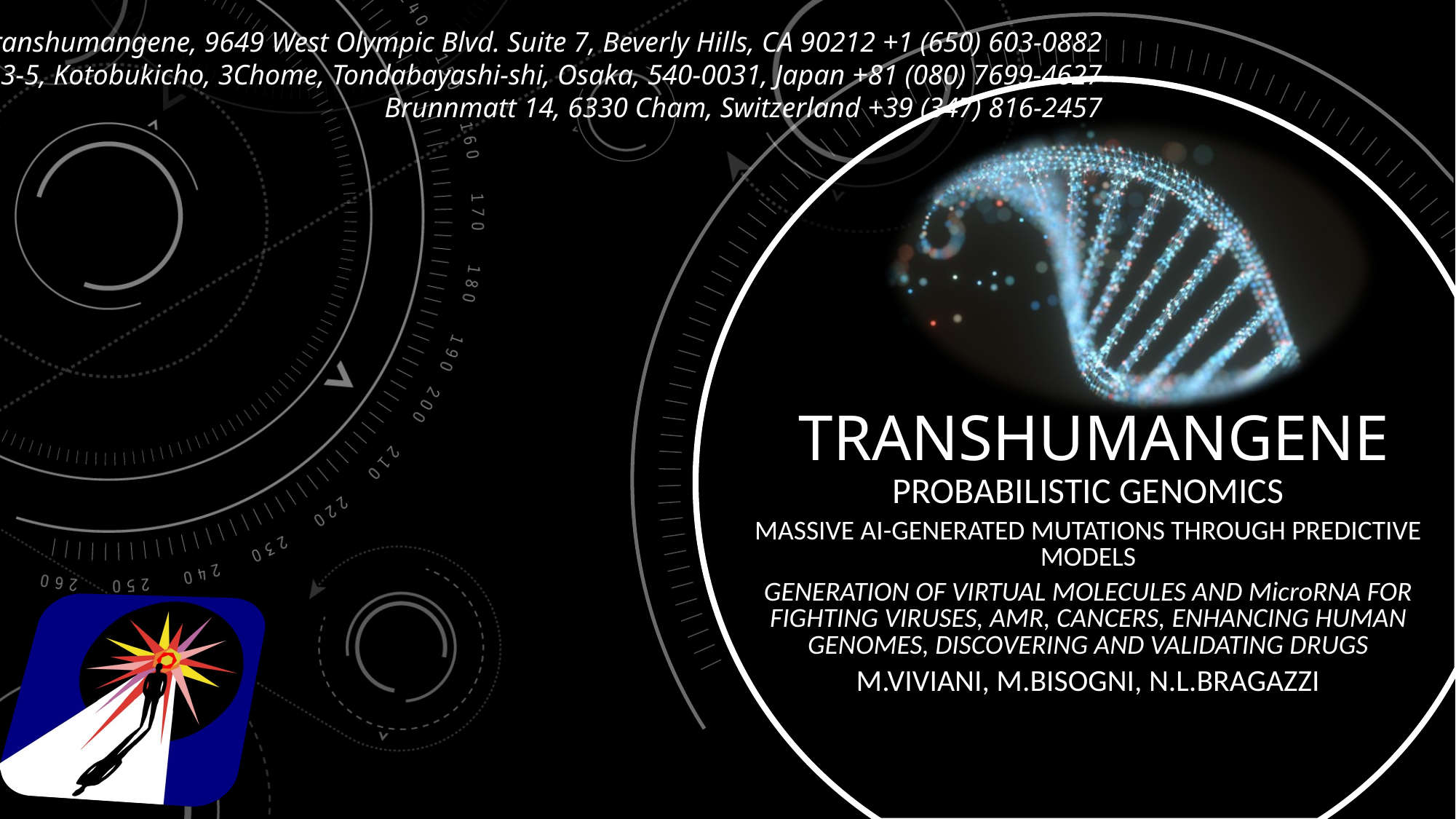
Probabilistic genomics is the conceptual heart of TranshumanGene. Rather than studying a genome as a fixed string alone, the program studies families of possible changes, their biological implications and their interaction with proteins, enzymes, RNA and therapeutic candidates.
From sequencing to hypothesis generation
The first step is data normalization. Sequencing outputs come from different instruments and formats, and the presentation explicitly notes that a normalization layer is necessary before higher-order analytics become reliable. Once normalized, the system can group relevant mutations, build aggregate views and compare emerging patterns across cohorts or disease contexts.
Virtual molecules and microRNA
TranshumanGene then extends from observation to design. AI can create large libraries of virtual molecules and projected microRNA candidates, evaluate their expected genomic impact and rank them for further review. This does not make a therapeutic claim on its own; it creates a more efficient shortlist for laboratory work.
Representative use cases
The presentation connects this approach to viruses, antimicrobial resistance, cancers, population-specific genomics, and broader omics science. In all cases, the value proposition is the same: compress years of blind search into a smaller number of explainable, testable hypotheses.
Scientific discipline
Robotics presents this page as a research explanation, not as a clinical assertion. Predictions must still be validated experimentally, biologically and ethically. The contribution of AI is speed, coverage and prioritization.