
The uploaded deck presents MUTANT as the engine that operationalizes TranshumanGene. It works as a normalization and exploration layer that helps research teams move from raw omics data to structured decision-making.
Pipeline logic
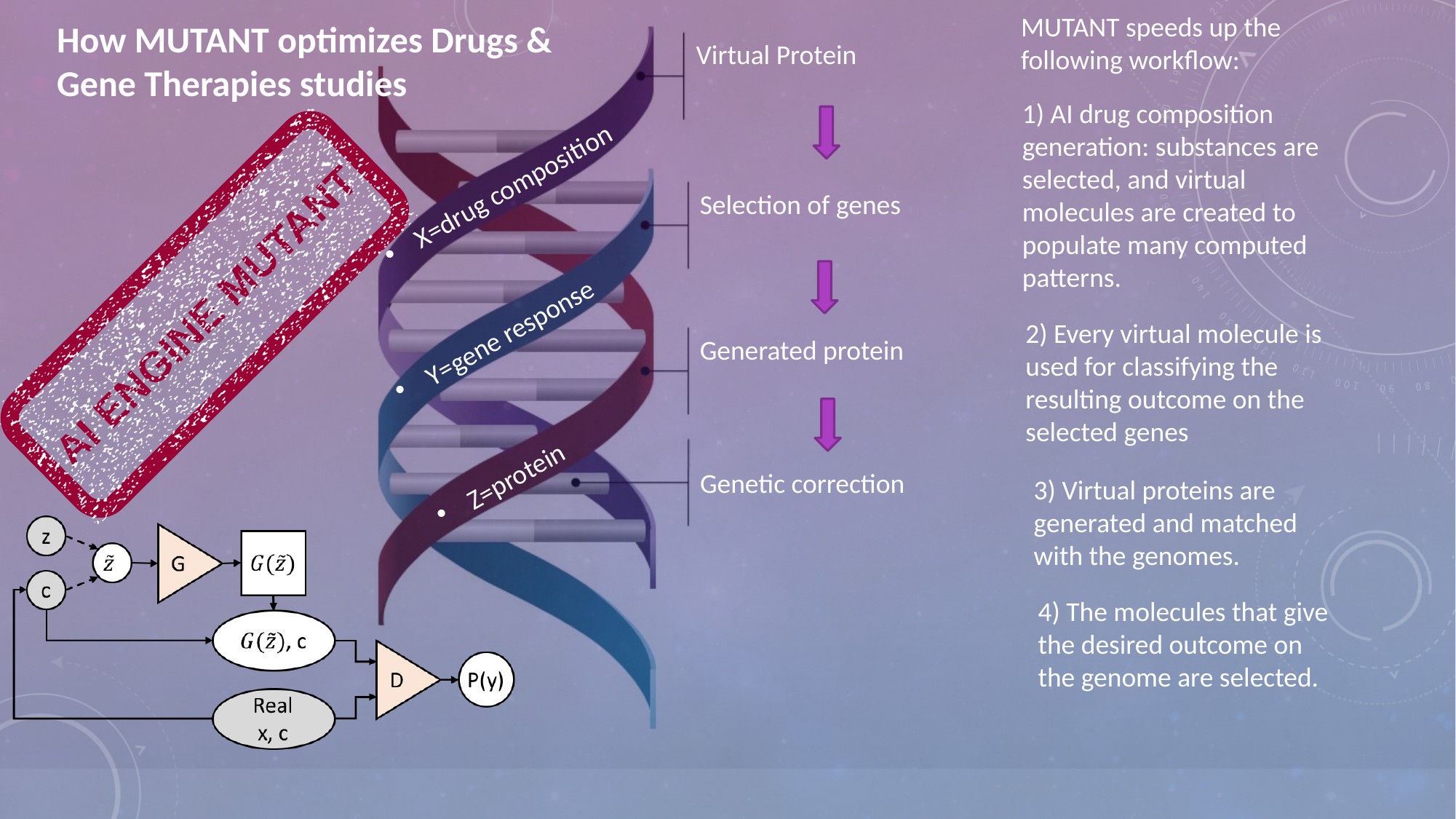
Its steps can be summarized as: normalize genomic data, detect or simulate mutations, aggregate patterns, project candidate molecules or genetic interventions, evaluate predicted outcomes, and cycle through validation checks. This transforms a large, heterogeneous biological search space into a manageable engineering workflow.
Collateral-effect checking
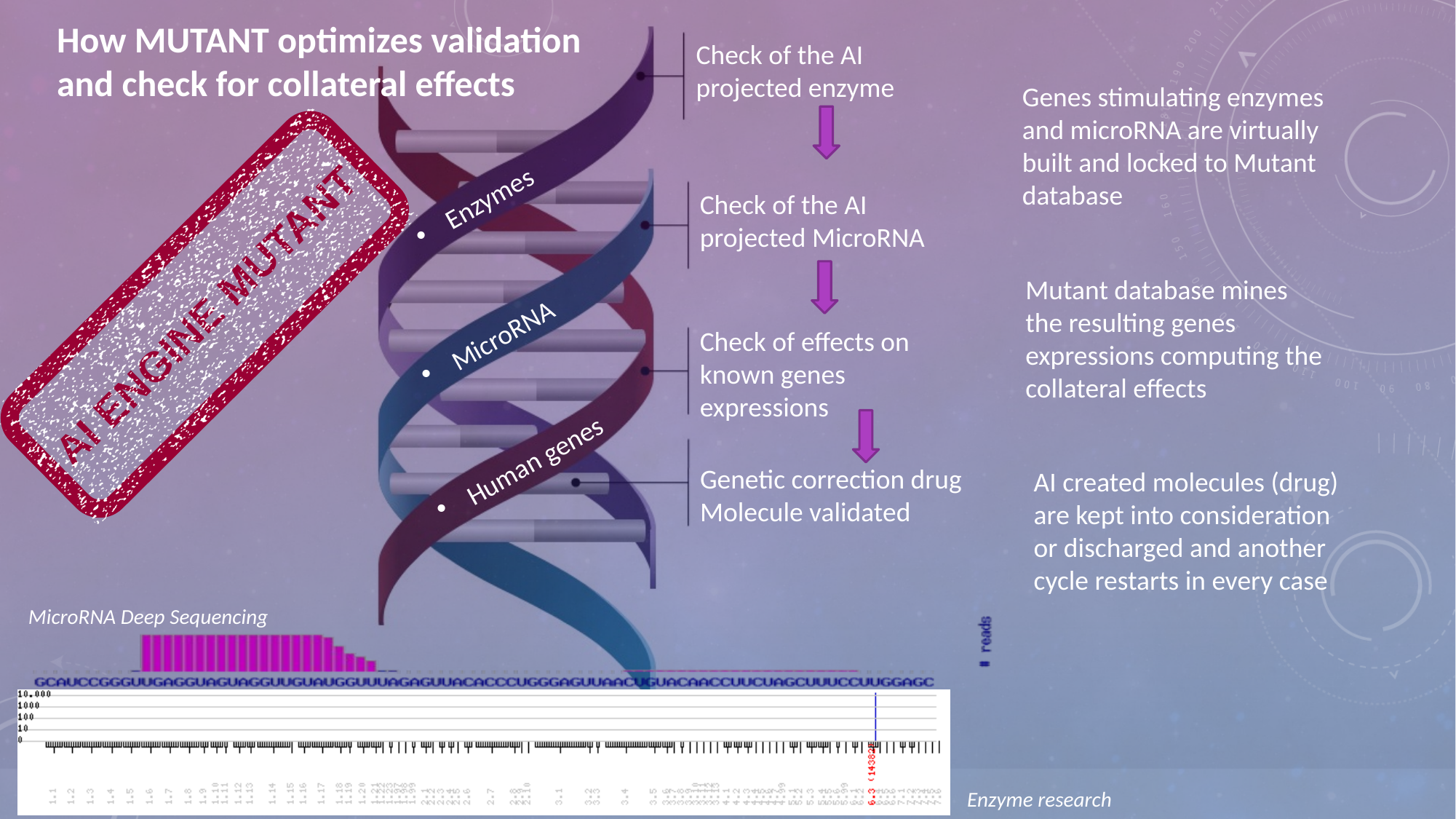
A notable part of the presentation is the effort to examine collateral effects. Candidate molecules are not only judged by their desired impact on selected genes; they are also screened against downstream expressions, enzyme interactions and projected microRNA behavior. This makes the platform more useful for risk-aware prioritization.
Computational acceleration
The deck explicitly positions the system as a way to shorten drug-development exploration from years to months for certain pre-validation phases. Robotics preserves that framing carefully: AI accelerates the ranking and selection loop, while laboratory evidence remains essential.
Interfaces with laboratories and clients
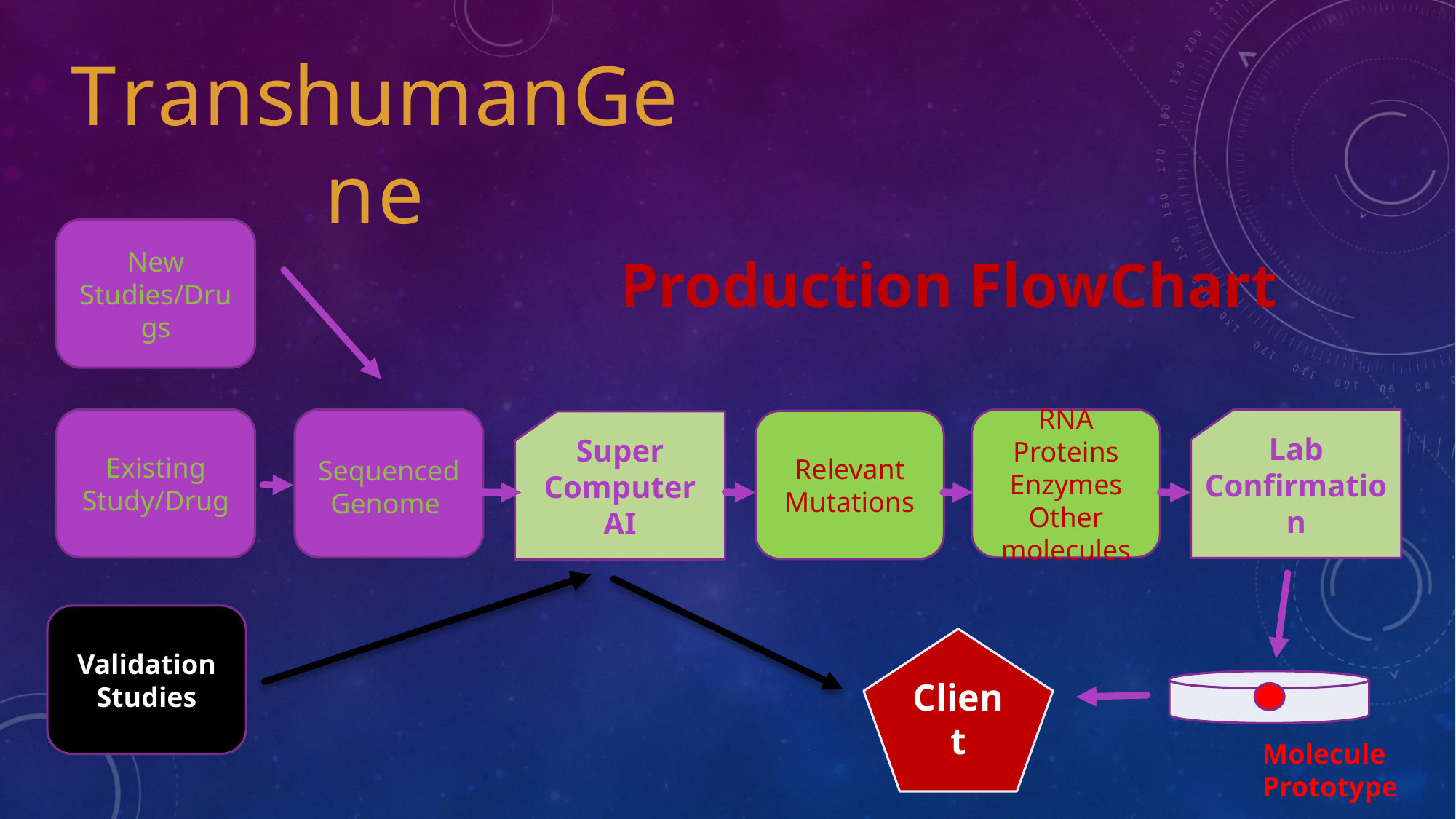
The flowchart in the presentation shows a clear handoff from sequencing and existing studies into supercomputing + AI, then toward relevant mutations, molecule prototypes, laboratory confirmation and external clients or research partners. That translational path is central to the program.