
Physics • AI and Supercomputing • Genomics and Multi-Omics • Cryptography and Proof Systems • Water Infrastructure • Robotics • Ecology • Humanitarian Engineering
Executive Scientific Profile
Maurizio Viviani can be described most accurately as a scientist of systems: a technical and academic figure whose work moves across mathematical physics, computational intelligence, multi-omic bioscience, cryptographic provenance, cyber-physical infrastructure, and mission-oriented humanitarian engineering. His profile is unusual not because it is merely broad, but because the breadth is internally coherent. Across these domains, the same methodological constants recur: formal reasoning, high-dimensional data integration, inferential rigor, adversarial awareness, measurability, traceability, and deployment realism.
His professional identity is therefore not reducible to a single title such as AI specialist, genomic researcher, or infrastructure architect. Instead, it is organized around a deeper scientific posture: the construction of verifiable systems in which computation, sensing, biological interpretation, governance constraints, and operational consequences are mathematically and architecturally coupled. This posture explains why his work repeatedly converges on environments in which weak evidence, weak governance, or weak infrastructure would be unacceptable-clinical interpretation, privacy-preserving bioscience, resilient water systems, ecological recovery, and identity- or payment-related trust layers.
From an institutional standpoint, Viviani's distinctive value lies in combining conceptual architecture with engineering translationality. He operates at the boundary where scientific abstraction becomes method, method becomes stack design, and stack design becomes deployable capability. That makes him particularly suited to settings requiring cross-domain synthesis: startup incubation, deep-tech leadership, advanced R&D coordination, science-driven venture creation, and high-consequence prototype programmes.
Formation, Scientific Temperament, and Editorial methodological Identity
Viviani's formative arc is international and structurally interdisciplinary. His education and research exposure span Italy, the United Kingdom, and the United States, a trajectory he frames as a kind of harlequin education: not fragmented, but polycentric. Italy provided mathematical austerity, respect for proof, and the habit of conceptual exactness. The United Kingdom reinforced synthesis, debate, methodological openness, and the ability to connect fields without diluting rigor. The United States contributed scale, computational ambition, and immersion in environments where simulation, instrumentation, and supercomputing are treated as natural components of scientific practice.
This formation is significant because it produced a mind comfortable with both microscopic and macroscopic problem spaces: from molecular and omic inference to infrastructure-scale coordination; from signal integrity and instrument calibration to policy-aware digital architectures; from abstract modelling to field deployment. In epistemic terms, his profile is that of a scientist trained to navigate heterogeneous state spaces without surrendering formal discipline.
Equally important is the ethical substrate of this formation. Military and Alpine training, followed by service as a United Nations military observer, introduced him to fragile environments where water scarcity, infrastructural collapse, contamination, displacement, and avoidable suffering were not theoretical topics but operational realities. Those experiences appear to have transformed scientific curiosity into scientific duty. Technology, in this view, is not primarily a medium of novelty; it is a medium of protection. The criterion of value becomes: can the system survive real conditions, and can it preserve life, dignity, and institutional trust under constraint?
This biographical path matters professionally because it clarifies the coherence of his later work. The same scientist who reasons in terms of supercomputing, latent-variable inference, and cryptographic proof systems also reasons in terms of maintainability, resilience, fallback modes, hostile-environment survivability, operator responsibility, and civic consequence. That fusion of formalism and field realism is one of the most important characteristics of his profile.
Physics, High-Performance Computing, and the Logic of Hypercomputation
A foundational layer of Viviani's scientific identity is physically grounded computation. His work repeatedly reflects habits associated with precision instrumentation, telemetry-conscious design, calibration discipline, and failure-aware systems thinking. Even when the final application is bioscience or humanitarian infrastructure, the underlying mentality remains recognizably physical: state variables matter; observability matters; perturbations matter; error propagation matters; and claims are only as strong as the measurement and inference chain that supports them.
Within this framework, compute is not treated as an undifferentiated commodity. It is an evidentiary substrate. High-performance computing, GPU-accelerated pipelines, and supercomputing-class execution appear in his work not as decorative indicators of scale but as mechanisms for achieving deterministic throughput, tractable simulation, accelerated search across combinatorial biological spaces, and reproducible operation in data-intensive environments. This is especially visible in the Digimatronics and hypercomputing language surrounding his work, where large-scale modelling is treated as a practical precondition for trustworthy inference rather than merely a performance benchmark.
The scientific vocabulary associated with this layer includes probabilistic modelling, simulation-heavy computation, large-state-space exploration, quantitative signal analysis, quantum-inspired reasoning, and computational architectures able to sustain heterogeneity at scale. Rather than isolating physics, computing, and biology into separate silos, Viviani tends to regard them as mutually translatable domains linked by mathematically disciplined representation and inference.
Systems Biocomputation: Genomics, Multi-Omics, and Predictive Biomedical Intelligence
In bioscience, Viviani's work is organized around the proposition that living systems are information-rich, multi-layered, and therefore computationally legible-provided that the computational formalism is sufficiently expressive. This leads to a systems-biocomputational approach in which genomics, transcriptomics, proteomics, metabolomics, phenomics, environmental variables, clinical observables, and behavioural covariates are not treated as independent datasets but as coupled informational strata within a single inferential field.
TranshumanGene is the flagship expression of this approach. It is framed not merely as a genomics project, but as an AI-mediated biological interpretation platform capable of integrating immense volumes of omic and clinical information. The architecture attributed to it includes probabilistic genomics, virtual-molecule generation, microRNA-centered strategies, mutation forecasting, and the treatment of DNA and related omic layers as computationally tractable structures subject to modelling, normalization, and predictive analysis.
A central computational engine within this scientific trajectory is AI4Omics. This framework is described as a parallelized environment for accelerating and normalizing multi-omic analysis. Its logic is archetypally modern: deep neural architectures for pattern extraction in high-dimensional spaces, variational autoencoders for latent-structure compression, transfer-learning strategies for low-sample and heterogeneous cohorts, graph-based representations for relational biology, and ensemble/Bayesian reasoning for robust clinical-grade interpretation. In practical terms, AI4Omics is designed to move beyond single-modality analytics and toward integrated latent-space reasoning across genomic, transcriptomic, proteomic, and metabolomic manifolds.
The underlying scientific problem is formidable. Multi-omic datasets are typically sstructure, noisy, heterogeneous, and ontologically inconsistent across studies. Viviani's approach addresses that difficulty through harmonization, normalization, ontology-aware interoperability, and cross-study validation logic. The aim is not simply to classify; it is to preserve inferential integrity while extracting biologically meaningful structure from complex, partially observed systems. This is why the language around his work includes domain adaptation, data compatibility, reproducibility, and interpretive robustness rather than only raw model performance.
GeneDetect and related rare-disease interpretation pathways fit naturally into this frame. DNA is treated as executable biological code whose pathological perturbations can be prioritized through inferential ranking, variant classification, phenotypic alignment, and multi-source evidence fusion. The methodological emphasis on Bayesian evidence accumulation, ensemble prediction, and structured decision support suggests a form of clinical AI that is less interested in opaque prediction than in compressing diagnostic latency under conditions of uncertainty.
MetabolAite extends this logic into metabolomics and pre-symptomatic disease forecasting. Here the emphasis is on metabolic network modelling, biomarker integration, environmental covariates, and risk-estimation before overt symptomatology. The conceptual importance of this strand is that it shifts medical computation from retrospective recognition toward anticipatory physiology: an attempt to infer dysfunction while it is still latent, subclinical, or only weakly expressed in the biochemical state vector.
Other associated research directions reinforce the same scientific signature: predictive virology and viral mutation forecasting; microRNA deep sequencing; enzyme-oriented therapeutic design; drug side-effect prediction at the genome-person interface; ICU-oriented genotype-informed treatment stratification; radioprotection and hazardous-environment genomics; antimicrobial-resistance analytics; educational dissemination through genomic training initiatives; and normalization engines such as MUTANT for the standardization and organization of omic data prior to downstream inference. Collectively, these efforts define a biocomputational programme concerned with the geometry of biological variation, the probabilistic anticipation of pathological evolution, and the rigorous operationalization of AI within bioscience.
Verifiable Trust Infrastructure: Cryptography, Proof, Provenance, and Privacy-Preserving Coordination
One of the most consequential dimensions of Viviani's work is the formalization of verifiable trust infrastructure as a scientific and engineering discipline. In this formulation, tokenization is not a financial gimmick and cryptography is not an ornamental add-on. Rather, tokenization is treated as a continuation of the scientific method by infrastructural means: observations become signed evidence; evidence becomes provenance; provenance becomes machine-checkable proof; and proof becomes accountable action, access, entitlement, or value transfer.
A particularly advanced aspect of this work is its embrace of privacy-preserving proof systems. Viviani's trust architecture discusses zero-knowledge systems in a concretely humanitarian register: a patient should be able to prove consent or protocol compliance without revealing a genome; a refugee should be able to prove eligibility for a service without exposing a life-endangering identity; a water operator should be able to prove that safety thresholds were satisfied without disclosing geospatially sensitive infrastructure details. This is an unusually mature articulation of zk systems because it links abstract cryptography to real moral and operational asymmetries.
The same philosophy extends to confidential compute, mixnet-style metadata privacy, and programmable data licensing. Privacy is not reduced to encryption-at-rest. Instead, privacy is embedded into execution, access pattern protection, and proof semantics. Confidential smart-contract paradigms matter because they allow verifiable computation over sensitive inputs; mixnet logics matter because metadata frequently reveals more than payloads; data-market concepts matter only insofar as they preserve consent, provenance, fair access, and non-exploitative value flow. This combination positions Viviani's work not merely within blockchain discourse, but within the deeper mathematics of trust under incomplete disclosure.
The Gene-Chain / DNA-token line of work is especially important because it demonstrates how these ideas were translated into a bioscience setting. Genomic data are treated as permanent, predictive, and family-entangled identifiers that cannot ethically be managed through naive centralization or reckless openness. The response is a cryptographically mediated representation of rights, consent states, and permissions rather than exposed biology. In that sense, the DNA token acts as a mathematical shadow of biological identity: enough structure to authorize research or access, but not enough raw disclosure to recreate the person's biological vulnerability.
Applied Humanitarian Engineering: Water Systems, Biological Security, and Cyber-Physical Resilience
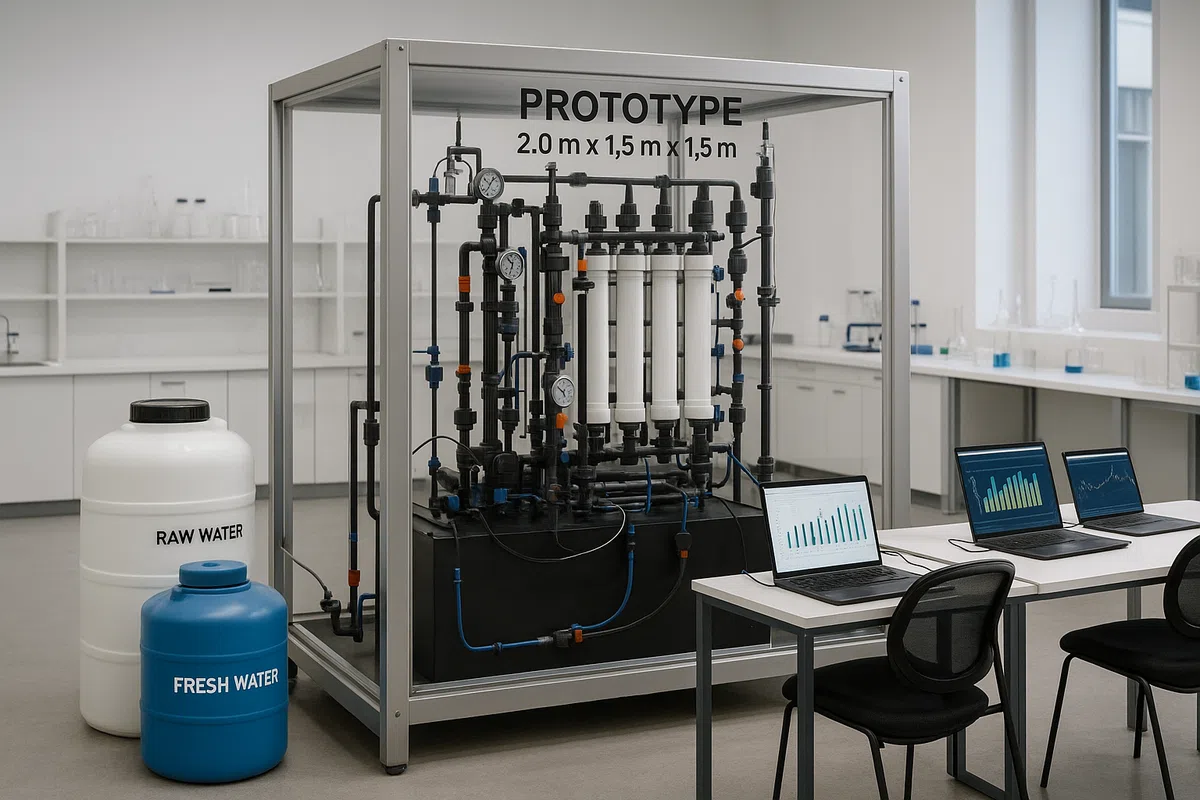
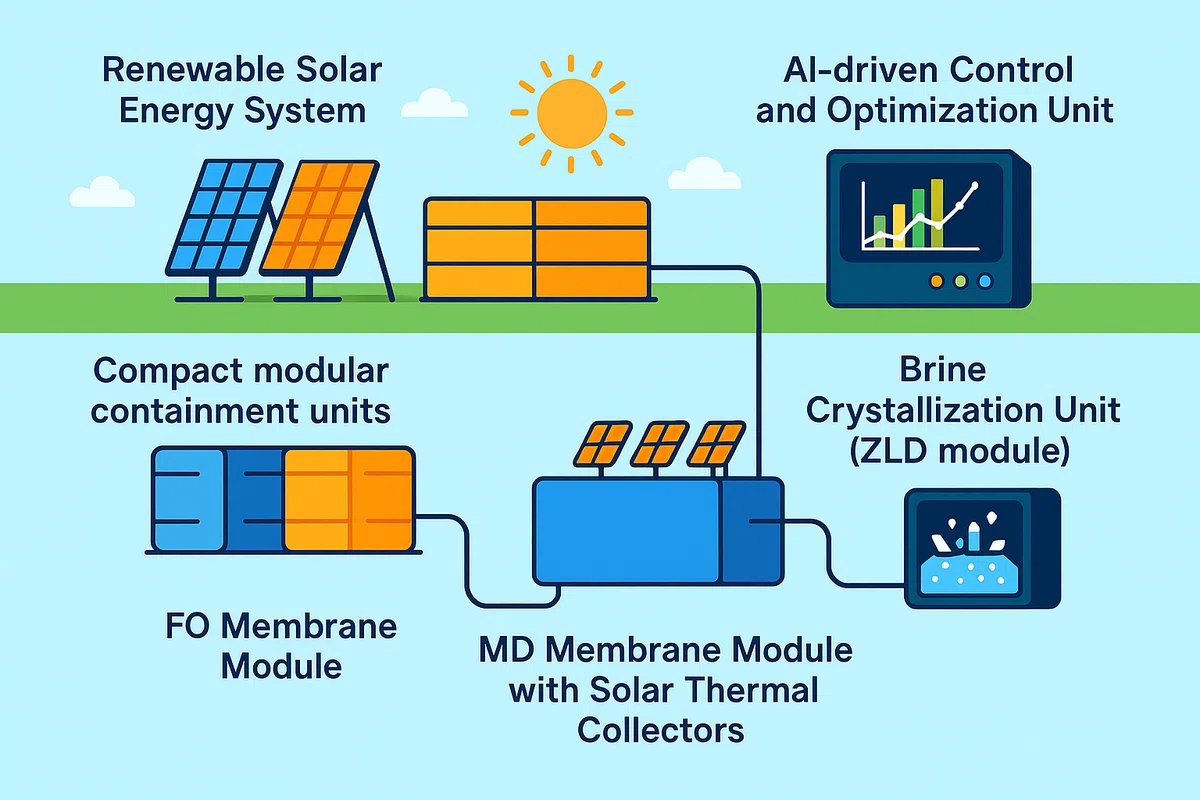
Aqua Vitaque is best understood as an applied outcome of Viviani's wider scientific method rather than as an isolated venture. Technically, it is a modular water infrastructure architecture for decontamination, safe reuse, optional desalination, and deployment in constrained or fragile contexts. Conceptually, it is a cyber-biological infrastructure problem: the system must characterize feedwater, manage contaminants, decide when desalination is justified, maintain evidence integrity, incorporate biosensing and quality gates, support auditable AI, and remain resilient against cyber-physical failure or misuse.
This makes Aqua Vitaque relevant to a scientific resume because it demonstrates translation from formal architecture to field-ready engineering. The platform's decontamination-first doctrine is itself a systems insight: desalination is not treated as dogma, but as one module in a governed treatment architecture whose operating mode depends on salinity, contamination burden, reuse targets, and discharge constraints. The associated digital layer-spectroscopic or biological monitoring, predictive supervision, anomaly detection, signed configuration management, role-based access, and fallback-safe control-shows an architect who thinks about infrastructure as a coupled evidentiary and operational organism.
More deeply, the Aqua Vitaque logic reflects a view that water security is inseparable from public-health and biosurveillance concerns. Contaminated water is not only a process-engineering issue; it is a medium for pathogen amplification, antimicrobial-resistance dynamics, ecological destabilization, and systemic civic fragility. In that respect, Aqua Vitaque sits naturally beside genomics and verifiable trust infrastructure: all three are concerned with how biological risk, measurement, governance, and intervention can be joined without sacrificing rigor or dignity.
Robotics, Ecological Recovery, and Planetary Systems Thinking
Another consistent axis of Viviani's profile is the extension of systems thinking beyond human clinical or infrastructural domains into ecological and planetary ones. Robotics, biospheres, rover-related thinking, marine and pollution-oriented modelling, and post-disturbance ecosystem recovery all appear within his wider body of work. The scientific continuity is straightforward: complex living systems-whether a human metabolic network, a microbial ecosystem, a degraded forest, or a water body under contamination pressure-require multiscale sensing, data fusion, adaptive control, and explicit stewardship.
This orientation matters professionally because it prevents his work from collapsing into purely anthropocentric engineering. Ecological resilience, habitat continuity, soil and vegetation recovery, microbial balance, and pollutant interpretation are treated as technically legible and operationally actionable. In practice, this means combining robotics, ecological modelling, biosensing, and computational design into systems intended not only to analyze damage but to participate in restoration. The same design ethic visible in water systems-field realism, accountability, and evidence integrity-reappears here under a broader planetary lens.
Academic, Editorial, and Public-Facing Scientific Activity
Viviani's profile is also academic and communicative in a non-trivial sense. It includes publication-oriented collaboration, editorial activity, scientific events, and educational work at the interface of AI, supercomputing, medicine, and bioscience. He appears associated with conference presentations on artificial intelligence and clinical research, computational medicine, cells and extracellular templates, and broader questions of big data in biomedical education. This dimension is important because it shows that his work is not only technically generative but also discursively generative: he can articulate complex architectures to scientific, institutional, and mixed audiences.
Open-innovation and FabLab culture appear as recurrent motifs in his trajectory. These are professionally relevant because they suggest comfort with collaborative prototyping, interdisciplinary translation, and the social architectures of technology creation. High-level public and governance-adjacent settings-such as World Economic Forum contexts and discussions around tokenized medicine-further indicate fluency at the interface of research, governance, infrastructure, and strategic narrative. For an incubator or deep-tech institution, that fluency matters: it is often decisive when a scientific platform must move across laboratories, partners, funders, and regulators without losing conceptual integrity.
Selected Scientific and Technical Vocabulary Associated with the Profile
Probabilistic genomics; multi-omic data fusion; latent-variable modelling; variational autoencoders; transfer learning; Bayesian evidence aggregation; graph-relational biological inference; rare-disease interpretation; predictive metabolomics; phylogenetic and mutation forecasting; microRNA and enzyme-oriented computational design.
Supercomputing; GPU-accelerated pipelines; deterministic execution; hypercomputing; simulation-driven inference; quantum-inspired modelling; instrument calibration; telemetry-aware architectures; failure-aware system design; adversarially constrained deployment.
Cryptographic provenance; tokenized proof systems; decentralized identity; DNA-token logic; verifiable consent; zero-knowledge proof architectures; confidential compute; metadata privacy; anti-Sybil control; formal verification; sigma-style verifiable computation; privacy-preserving payment rails.
Cyber-physical water infrastructure; decontamination-first treatment logic; biosensing and biological quality gates; auditable AI; digital supervision; signed configurations; offline-safe fallback modes; evidence-integrity logging; resilient operator workflows.
Humanitarian engineering; ecological stewardship; robotic restoration logic; community-facing resilience; operator training; accountable governance; science under fragile conditions; evidence over hype.
Maurizio Viviani can therefore be characterized as a rare type of scientific leader: one whose comparative advantage lies not in narrow specialization, but in rigorous cross-domain synthesis under conditions where formal accuracy and real-world consequence are equally non-negotiable. He is simultaneously a computational scientist, bioscience architect, trust-systems thinker, infrastructure designer, and humanitarian technologist. The continuity across these identities is methodological rather than rhetorical: measurement, proof, provenance, privacy, accountability, and deployability.
For academic institutions, deep-tech incubators, mission-oriented ventures, and advanced research programmes, this profile is valuable because it combines intellectual amplitude with technical seriousness. Viviani's work repeatedly demonstrates a willingness to engage with the difficult part of science and engineering: not the generation of abstract novelty alone, but the design of systems that remain interpretable, defensible, and ethically governable when subjected to scale, uncertainty, privacy constraints, or institutional fragility. That is a distinctly uncommon and strategically important scientific profile.
Maurizio Viviani / Systems scientist • computational biologist • AI architect • humanitarian technologist • designer of verifiable trust infrastructure
Core Scientific Identity | Primary Technical Range | Strategic Distinction
A transdisciplinary scientist trained across physics, computation, biosciences, and field systems, with an orientation toward high-stakes infrastructures where evidence, resilience, and ethics must remain coupled. | High-performance scientific computing, multi-omic inference, probabilistic genomics, cryptographically verifiable workflows, cyber-physical water systems, ecological sensing, and adversarially aware digital governance. | A rare capacity to integrate mathematical rigor, AI architecture, bioscience, privacy engineering, and humanitarian deployment into operational systems rather than disconnected specialist outputs.
Stack Layer | Scientific / Mathematical Meaning | Operational Interpretation in Viviani's Work
Compute | Deterministic execution, tractable large-state-space exploration, reproducible numerical pathways, parallel acceleration. | Supercomputing, GPU pipelines, hypercomputing logic, latency-aware verification workflows, large-scale bioscience and token-operation testing.
Provenance | Cryptographically bound lineage, chain-of-custody, temporal order, replay resistance, and event semantics. | Tamper-evident logs, audit-ready event schemas, policy-constrained records, traceable consent states, and compliance-grade reporting.
Private Proof | Zero-knowledge or privacy-preserving verification of predicates on sensitive data without raw disclosure. | Eligibility proofs, consent proofs, threshold proofs for critical infrastructure, confidentiality-preserving medical or humanitarian workflows.
Economic Coordination | Mechanism design, anti-Sybil incentives, programmable governance, and allocation rules encoded as constraints. | Token engineering for bioscience, identity-linked authorization, programmable rights, verifiable licensing, and privacy-preserving payment logic.