
Maurizio Viviani
Founder and CEO, Aqua Vitaque | Scientific and Technical Lead for Operational Decision Logic, AI/Digital Twin and Ethical Water-Resilience Architecture
Italy | Email: info@robotics.it | aquavitaque.com
Professional profile
Founder and CEO of Aqua Vitaque; interdisciplinary scientist, technologist and systems architect working at the intersection of artificial intelligence, supercomputing, water systems, robotics, genomics, cryptographic trust infrastructure and humanitarian engineering. Professional positioning is defined by the organization of complex, high-stakes problems into verifiable systems: measurable, privacy-aware, auditable and usable under real operational constraints.
For AQUA-ACT, the contribution is not a generic management function. It concerns the central Aqua Vitaque logic: how heterogeneous water-risk signals become bounded operational decisions; how an admissibility gate prevents unsafe, premature, or legally weak actions; how AI and digital-twin reasoning can support early warning to early action; and how ethical constraints, evidence integrity and public accountability are embedded directly into the technical design. The role is therefore both scientific and operational: technology architecture, decision methodology, prototype logic and ethical governance are treated as one integrated responsibility.
Core competences relevant to AQUA-ACT
• Operational decision methodology for water-related emergencies, including trigger-to-decision logic, admissibility-gate reasoning, escalation thresholds, response options and controlled recovery criteria.
• AI, digital twin and supercomputing-oriented system design, including weak-signal detection, simulation, prediction, bounded recommendations, explainability and evidence-to-action workflows.
• Multi-source data integration across sensors, utility logs, laboratory evidence, molecular or biological markers, contextual alerts, hydrological conditions and operator observations.
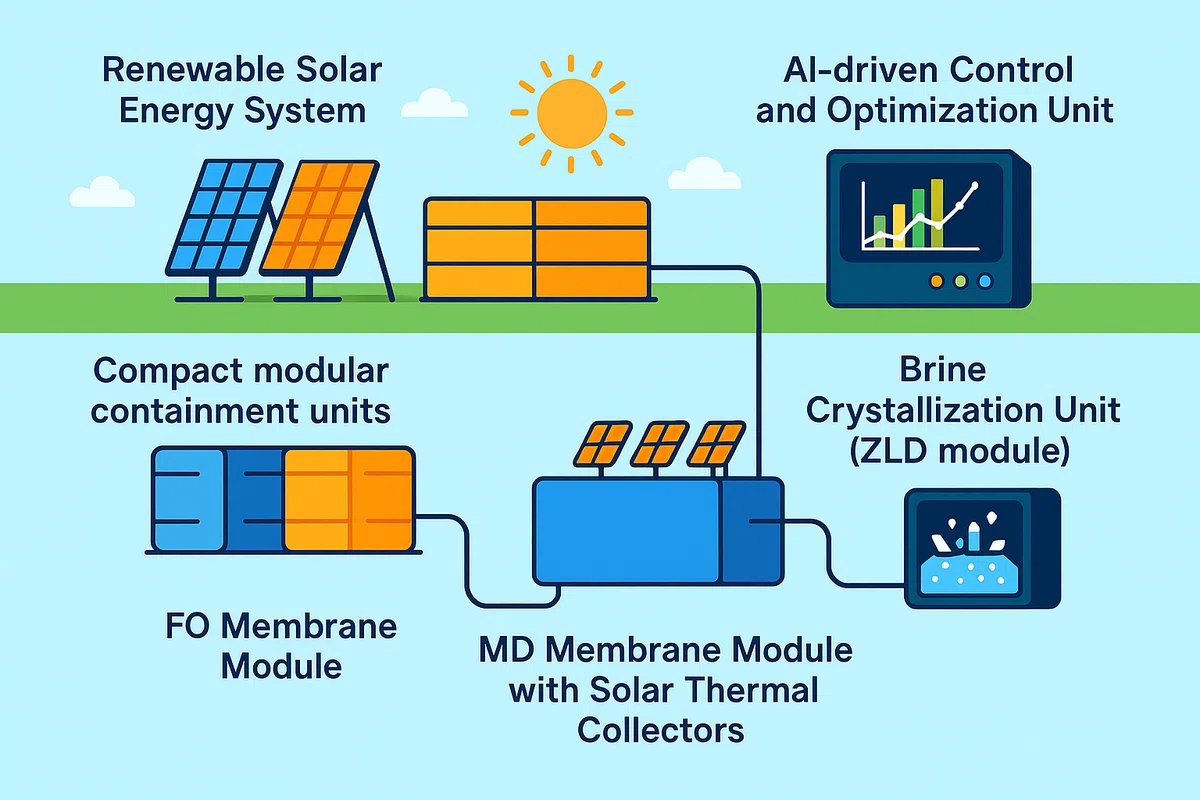
• Water-system innovation: decontamination-first modular architecture, RO/desalination as an activatable response module, membrane-informed control, biosensing, field realism and prototype-oriented engineering.
• Critical-infrastructure trust logic: auditable data flows, evidence integrity, traceability, signed configurations, role-based access, cyber-resilient supervision and reconstruction of decisions from event records.
• Computational biology and public-health intelligence, including genomics, multi-omics, pathogen/variant foresight, AMR-related themes and the interpretation of biological signals as part of wider preparedness logic.
• Ethics-by-design for water and technology: water as a protected public good, anti-coercion principles, data sovereignty, privacy, transparent claims, community dignity and responsible use of AI in high-impact contexts.
• Cross-domain scientific leadership, with capacity to align engineers, programmers, biologists, chemists, public-health experts, civil-protection actors and institutional reviewers around one operational architecture.
AQUA-ACT role and contribution
Within AQUA-ACT, the Aqua Vitaque scientific and technical contribution is led through a coherent operating-model function, not as a collection of isolated analytical inputs. The focus is on the transition from detected water-risk signals to admissible, coordinated, and documented civil-protection action.
• Define the Aqua Vitaque trigger-to-decision logic linking classified water-risk signals to notification, pre-activation, confirmatory diagnostics, candidate response options and escalation points.
• Design and refine the admissibility gate assessing response options against public safety, legal or regulatory authority, operational feasibility, proportionality and timing before actions are activated.
• Translate chemical, biological, operational and contextual indicators into decision structures usable by civil protection authorities, water utilities and public-health stakeholders.
• Guide the AI/digital-twin concept for pattern discovery, scenario simulation, alert escalation, response playbooks and explainable outputs for operators and reviewers.
• Connect prototype logic with SOP architecture, validation exercises, KPI evidence, training materials and replication requirements so that outputs remain technically credible and transferable.
• Support data-governance and auditability requirements: event logs, traceable evidence, controlled access, documented assumptions, human-in-the-loop approval and non-hype validation criteria.
• Maintain the ethical boundary of the project: safe water as a human-rights and civil-protection issue; AI as decision support, not an uncontrolled authority; and technological deployment as a duty to protect rather than a vehicle for coercion.
Selected funded project and major delivery experience
• TranshumanGene / AI4Omics / GeneDetect / MetabolAite - computational biology and multi-omics platforms. Founder and scientific/technical architect of AI-driven bioscience concepts for probabilistic genomics, mutation modeling, rare-disease interpretation, multi-omic integration, predictive metabolomics, pathogenic-variant ranking, AMR-related themes, and virus/variant foresight. Relevance to AQUA-ACT: interpretation of biological markers, transformation of complex biological evidence into operational classifications, and development of explainable AI pipelines for heterogeneous scientific data.
• Aqua Vitaque - founder-level system origination and water-resilience technology architecture. Creation of the Aqua Vitaque initiative as a modular, decontamination-first water-resilience platform combining safe reuse, optional desalination, membrane/treatment logic, biosensing, auditable AI, cybersecurity and evidence integrity. The documented concept covers scalable configurations from household and village units to community and camp-scale deployments, with emphasis on field repairability, low-infrastructure settings, AI monitoring, solar-compatible operation and humanitarian use. Relevance to AQUA-ACT: origin of the project mission, technical logic and ethical boundary around safe water, measurable claims and public protection.
• AQUA-ACT operational methodology - early warning to early action for water-related risks. Originator of the Aqua Vitaque bounded decision-making contribution used in AQUA-ACT: trigger-to-decision logic, admissibility gate, response menu, SOP architecture, evidence logs, recovery criteria and decision-time reduction logic. Relevance to AQUA-ACT: direct foundation for the project framework that converts chemical, biological, operational and contextual signals into admissible, coordinated and documented civil-protection actions.
• AI/digital twin and deployable response architecture for strategic water nodes. Designed the concept in which sensors, logs, laboratory evidence, molecular markers, source-water maps and operator observations feed a digital-twin and AI layer able to detect weak signals, simulate contamination or treatment scenarios, support alert escalation and generate bounded response playbooks. Relevance to AQUA-ACT: explainable decision support, prototype-to-policy translation, validation exercises and evidence-based recovery.
• Water-scarcity challenge and field-oriented membrane innovation work. Advanced the Aqua Vitaque technical concept through challenge-driven work on membrane lifespan modeling, predictive maintenance, contaminant accumulation, fouling prediction, and decentralized water-purification reliability. Relevance to AQUA-ACT: membrane-informed control, operating-envelope reasoning, practical maintenance logic and cost/reliability improvements for distributed emergency water systems.
• Verifiable Trust Infrastructure - cross-domain proof, provenance and auditability systems. Developed a broader trust-infrastructure framework based on compute, evidence, provenance, private proof and accountable value coordination. The portfolio extends across MedicineBC, DrugChain, ITALTRACK, FoodSupplyBC, OilGasToken, CoinActivator, FLOPPY and SuperComputingX, using signed events, hybrid persistence, audit trails, access control, privacy-preserving verification and adversarial design. Relevance to AQUA-ACT: event logging, evidence provenance, tamper-resistant records and audit-ready traceability of water-quality and response decisions.
• Pandemic and public-health computational foresight work. Applied phylogenetics, evolutionary computation, epidemiological mathematics, machine learning, mobility/demographic data, and biological modeling to viral evolution and outbreak dynamics, including SARS-CoV-2 mutation and variant-foresight themes. Relevance to AQUA-ACT: public-health interpretation of biological alerts, anticipatory risk logic and organization of uncertain biological evidence into defensible preparedness decisions.
• Digimatronics / hypercomputing and physics-informed system modeling. Developed and applied a physics-informed computational approach connecting supercomputing, AI acceleration, biological simulation, membrane fouling/desalination dynamics, epidemic modeling, robotics, identity systems, and cryptographic verification. Relevance to AQUA-ACT: digital-twin architecture grounded in physical constraints rather than pure pattern matching.
• Humanitarian, educational and open-innovation problem-solving portfolio. Built and disseminated technologies and methods across vulnerable or high-need contexts including water scarcity, field hospitals, disaster recovery, remote rural environments, ecosystem recovery, FabLab/open-source communities and hands-on scientific training. Relevance to AQUA-ACT: translation of advanced technology into usable procedures, operator training, local capacity building and ethical deployment.
Selected platforms and technology themes
Technical contribution to the AQUA-ACT work logic
• WP3/WP4 interface: translate operational scenarios, chemical/biological/operational indicators and contextual conditions into a signal-classification structure that can support decisions rather than remain passive information.
• WP5 contribution: shape the admissibility gate, response menu and SOP templates so that each response option is linked to activation conditions, constraints, lead actors, documentation requirements and recovery rules.
• WP6 contribution: support tabletop-exercise logic, decision-time measurement, gate-application accuracy, scenario comparability and refinement of the framework based on evidence rather than opinion.
• Cross-cutting contribution: align AI/digital-twin outputs with human accountability, public safety, explainability, traceability and institutional adoption by civil protection authorities and water utilities.
• Prototype-to-policy translation: convert prototype intelligence, membrane/treatment logic and water-quality evidence into a form usable for procedures, training, KPIs, replication and stakeholder review.
Selected scientific, technical and public-facing activities
• Portfolio recognition as award-winning scientist, computer scientist and AI, robotics and genomics expert, with experience spanning research, engineering, publication, public technology culture and open innovation.
• Documented connection with Elsevier Scientific Press editorial/scientific work and collaborative scientific environments covering biomedical big data, AI, supercomputing, COVID-era education, tissue engineering and clinical research.
• Speaker and public-facing scientific communicator in contexts addressing supercomputing for regenerative medicine, deep learning and neural networks, AI applications for diagnostics and treatment, cells and extracellular templates, and tokenizing medicine.
• Co-founder or participant in FabLab and open-source initiatives, supporting hands-on education, public experimentation and the dissemination of advanced technologies beyond closed specialist environments.
• Experience operating at the interface of research, governance and technology, including portfolio material linked to World Economic Forum Davos 2020 and Basel Life Panel discussions on technology and tokenized medicine.
• Military and field-humanitarian formation as Alpine officer and United Nations military observer, shaping a technical ethic focused on water, infrastructure, human dignity, resilience and protection of vulnerable contexts.
Ethical and governance posture for AQUA-ACT
The project ethics are not presented as an external declaration but as engineering constraints. The Aqua Vitaque leadership role is responsible for keeping the technology technically ambitious while bounded by public-safety, human-rights, privacy and institutional-accountability requirements.
• AI outputs must remain explainable, reviewable, and subordinate to authorized human decision makers; the system is designed to support action, not replace civil-protection responsibility.
• Water-quality and response claims must be linked to evidence: signal timestamps, thresholds, laboratory or field evidence, admissibility-gate results, operator actions and recovery criteria.
• Data use must remain proportionate and privacy-aware: collect what is needed, document why it is needed, protect access, and avoid exposing sensitive operational or community information unnecessarily.
• Technology deployment must protect vulnerable groups and avoid coercive or exclusionary effects; the ethical goal is safe water, continuity of essential services and accountable resilience.
Science
High energy physics and computational physics, astrophysical modeling, HPC, high-reliability systems, mission-control environments, and field observation. This is relevant to AQUA-ACT because the project requires precisely this type of method: multi-domain integration, failure-aware design, measurable evidence and controlled action under uncertainty.
Professional method: define the physical and operational reality; formalize the signal; classify uncertainty; constrain decisions ethically and legally; build a prototype or digital workflow; verify outputs; document evidence; and make the system usable by people who must act under pressure. This is the same method expressed in Aqua Vitaque and in the AQUA-ACT framework.
https://www.preprints.org/manuscript/202604.1401 Recent membrane-science preprint/publication on heterogeneous forward-osmosis membranes and transport-informed diagnostic logic for water-treatment control.
https://pubmed.ncbi.nlm.nih.gov/34501581/ COVID-19 / SARS-CoV-2 computational foresight work: modelling of viral mutation dynamics, variant-risk interpretation and preparedness-oriented public-health reasoning.
Languages and contact
• Languages: Italian: native; English: professional and scientific working proficiency.
• Contact: info@robotics.it; aquavitaque.com
Initiative / stack | Role or framing | Relevant focus for AQUA-ACT
Aqua Vitaque | Founder / water-resilience system | Decontamination-first modular water infrastructure, optional desalination, biosensing, AI supervision, evidence integrity, cybersecurity and humanitarian deployment.
AQUA-ACT methodology | Operational decision framework | Trigger-to-decision logic, admissibility gate, SOP architecture, response menu, validation evidence and civil-protection usability.
AI / Digital Twin | Scientific and technical architecture | Weak-signal detection, pattern discovery, prediction, scenario simulation, response playbooks and explainable operator outputs.
TranshumanGene | Founder / computational biology platform | Probabilistic genomics, multi-omics, mutation modeling, virus/AMR foresight, rare-disease interpretation, and personalized medicine logic.
AI4Omics / GeneDetect / MetabolAite / MUTANT | Computational engines | Omics normalization, biological inference, pathogenic-variant ranking, predictive metabolomics and reproducible data workflows.
Verifiable Trust Infrastructure / GeneChain | Trust and provenance architecture | Compute, evidence, provenance, private proof, cryptographic consent, traceability and audit-ready event semantics.
Digimatronics / hypercomputing | Systems-compute lineage | Physics-informed modeling, supercomputing, quantum-inspired reasoning, simulation-heavy engineering, and multi-scale system analysis.
Robotics / Beyond Plastic / ecological systems | Environmental and planetary focus | Marine pollution, nanoplastic impact, biospheres, robotic ecosystem recovery and ecological resilience.
OpenAIMED / FabLabs / open-source work | Education and dissemination | Training, open innovation, public scientific communication and capacity building for complex technologies.