



Scientific leadership across AI, robotics, biology, water systems, education and digital trust.
The program is presented as a scientific notebook: architecture, assumptions, applications, validation logic and visual evidence for researchers, innovators, students, professors, commercial partners and philanthropic organizations.
Maurizio Viviani
Transhumangene.com
Robotics.it
Strongartificialintelligence.com
ai4omics.com
strongaiinitiativegroup.com
info@transhumangene.com
EU +39(347)816-2457
Skype
strongartificialintelligence
https://linkedin.com/pub/maurizio-viviani/68/a60/4
Citizenship: Italian
https://www.robotics.it/team.html
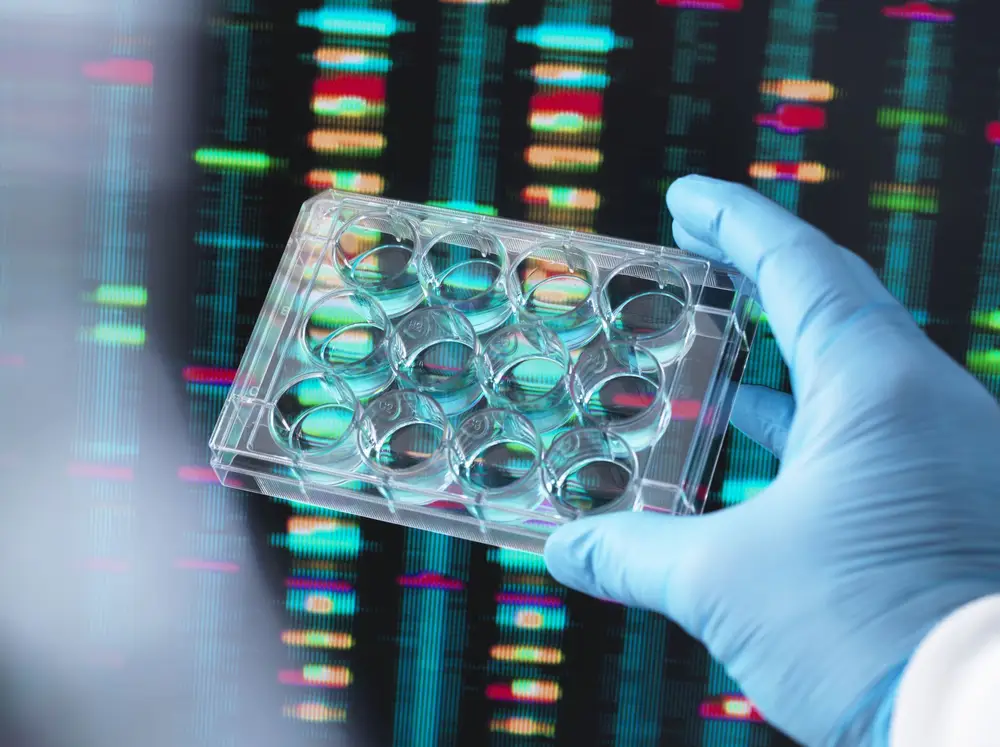
Computer scientist previously working on deep learning and genetics: experienced in genomics research (with a focus on large-scale genome sequencing projects and rare disorders) and single-cell genomics research
Creator/founder of
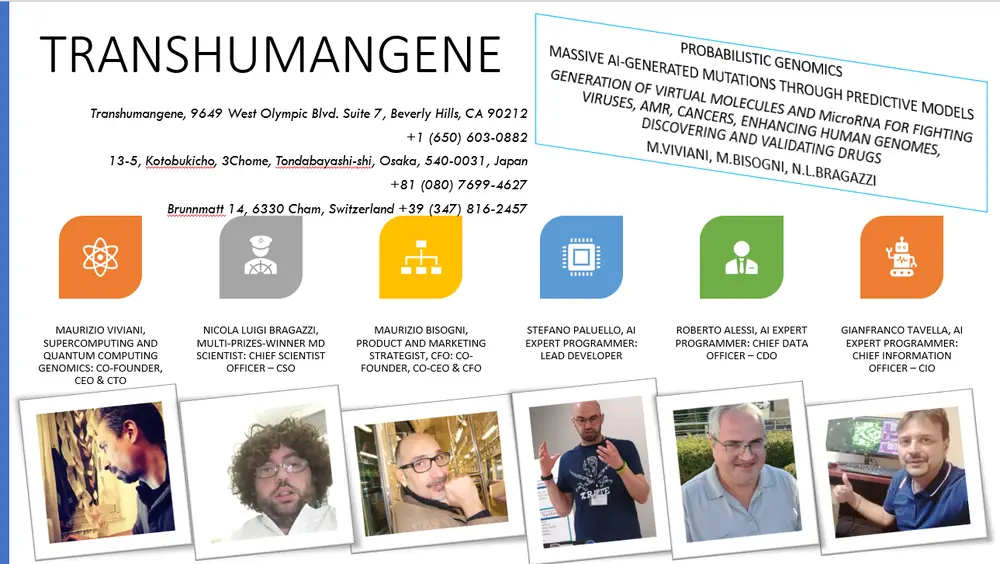
Transhumangene
probabilistic genomics
Massive ai generated mutations through predictive models
valid for the generation of virtual molecules and MicroRNA for fighting viruses, AMR, cancers, enhancing human genomes, discovering and validating drugs
Enzyme research
MicroRNA Deep Sequencing
Advantage on competitors
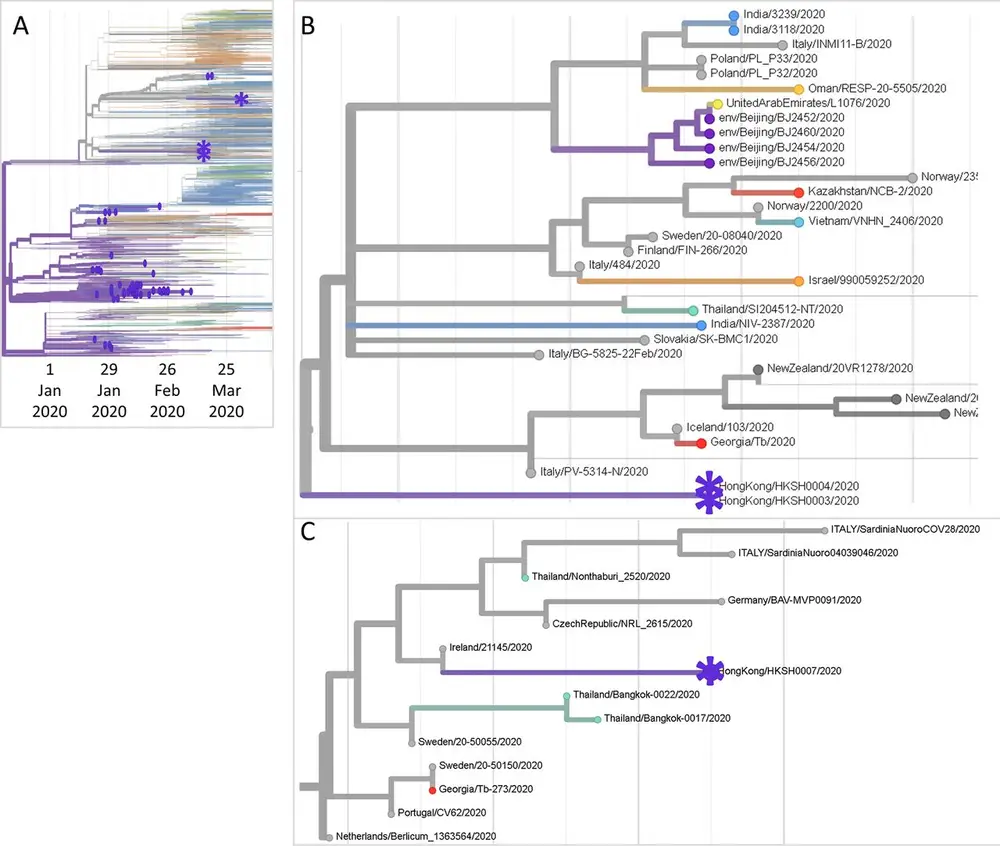
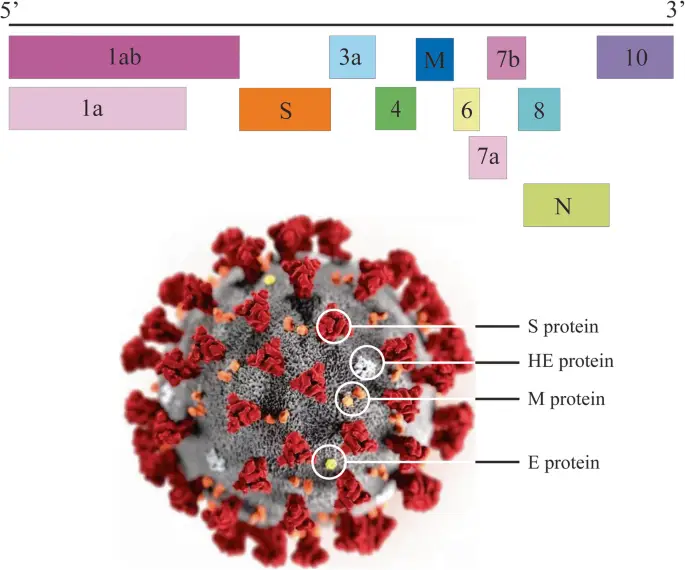
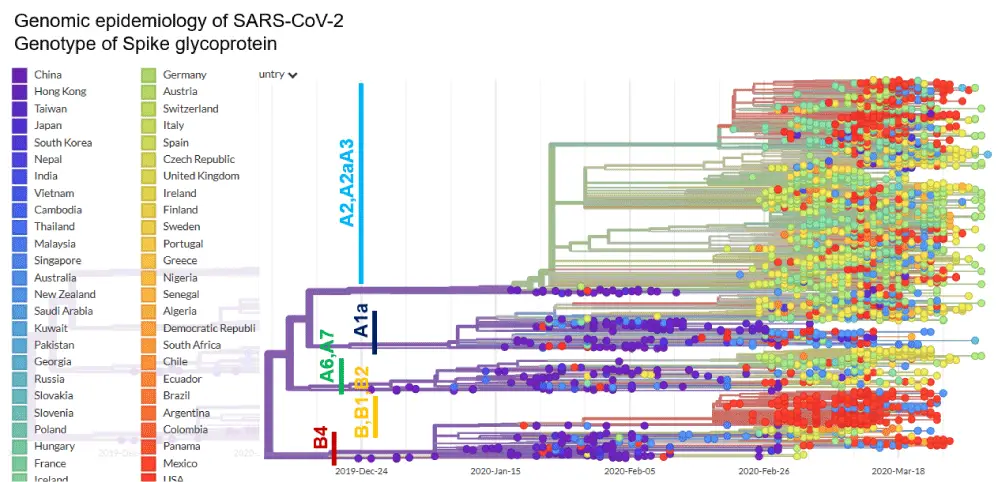
SARS-CoV-2
Studying and modeling the mutational landscape of SARS-CoV-2 is of paramount importance and especially timely given the urgent need to predict whether anti-COVID-19 vaccines will be effective or not, given the increasing spread of the so-called variants of concern (VOCs).
This would enable to optimize and enhance vaccine roll-out strategies
The example of Manaus, Brazil, is insightful since Manaus population seemed to have reached herd immunity; however, it was overwhelmed by the 2 and 3 COVID-19 waves, given the massive transmission of the so-called Brazilian VOC
WHAT WE HAVE DONE SO FAR
*AI4Omics =
Parallel
OS for
accelerating
and
normalizing
processes
and data
analysis
MetabolAite
= Solution for
diabetes
cures
10,120 h
Drugs under validation
Abstract
We are working on drugs validations; data will be released after journals publications
Medical education refers to education and training delivered to medical students in order to become a practitioner. In recent decades, medicine has been radically transformed by scientific and computational/digital advances-including the introduction of new information and communication technologies, the discovery of DNA, and the birth of genomics and post-genomics super-specialties (transcriptomics, proteomics,
interactomics
, and metabolomics/
metabonomics
, among others)-which contribute to the generation of an unprecedented amount of data, so-called 'big data'. While these are well-studied in fields such as medical research and methodology, translational medicine, and clinical practice, they remain overlooked and understudied in the field of medical education. For this purpose, we carried out an integrative review of the literature. Twenty-nine studies were retrieved and synthesized in the present review. Included studies were published between 2012 and 2021. Eleven studies were performed in North America: specifically, nine were conducted in the USA and two studies in Canada. Six studies were carried out in Europe: two in France, two in Germany, one in Italy, and one in several European countries. One additional study was conducted in China. Eight papers were commentaries/theoretical or perspective articles, while five were designed as a case study. Five investigations exploited large databases and datasets, while five additional studies were surveys. Two papers employed visual data analytical/data mining techniques. Finally, other two papers were technical papers, describing the development of software, computational tools and/or learning environments/platforms, while two additional studies were literature reviews (one of which being systematic and bibliometric).The following nine sub-topics could be identified: (I) knowledge and awareness of big data among medical students; (II) difficulties and challenges in integrating and implementing big data teaching into the medical syllabus; (III) exploiting big data to review, improve and enhance medical school curriculum; (IV) exploiting big data to monitor the effectiveness of web-based learning environments among medical students; (V) exploiting big data to capture the determinants and signatures of successful academic performance and counteract/prevent drop-out; (VI) exploiting big data to promote equity, inclusion, and diversity; (VII) exploiting big data to enhance integrity and ethics, avoiding plagiarism and duplication rate; (VIII) empowering medical students, improving and enhancing medical practice; and, (IX) exploiting big data in continuous medical education and learning. These sub-themes were subsequently grouped in the following four major themes/topics: namely, (I) big data and medical curricula; (II) big data and medical academic performance; (III) big data and societal/bioethical issues in biomedical education; and (IV) big data and medical career. Despite the increasing importance of big data in biomedicine, current medical curricula and syllabuses appear inadequate to prepare future medical professionals and practitioners that can leverage on big data in their daily clinical practice. Challenges in integrating, incorporating, and implementing big data teaching into medical school need to be overcome to facilitate the training of the next generation of medical professionals. Finally, in the present integrative review, state-of-art and future potential uses of big data in the field of biomedical discussion are envisaged, with a focus on the still ongoing "Coronavirus Disease 2019" (COVID-19) pandemic, which has been acting as a catalyst for innovation and digitalization.
Big Data for Biomedical Education with a Focus on the COVID-19 Era: An Integrative Review of the Literature
https://pubmed.ncbi.nlm.nih.gov/34501581/
Rola
Khamisy
Farah
Peter
Gilbey
Leonardo B Furstenau
Michele Kremer
Sott
Raymond Farah
Maurizio Bisogni
Jude
Dzevela
Kong
Rosagemma
Ciliberti
Nicola Luigi Bragazzi
BIOSPHERES AND ROVER
DIGIMATRONICS TRAIL
SURFACE OPERATIONS – EYES 3D LIDAR
Vorarlberger
Allee 38
1230 Vienna, Austria
www.factory-hub.io
Craig S. Wright Charles Sturt
University Sydney
Programming Supercomputers
2015
John Owens UC Davis
David
Luebke
NVIDIA
NVIDIA/
Udacity
Intro to Parallel Programming
2014
Andrew Ng Coursera
Machine Learning
David Evans Udacity
CS101 Building a search engine
2012
Sebastian
Thrun
CS373 Programming a robotic car
Stanford U. Peter
Norvig
Introduction to AI CS221
2011
IBM
Informix Integration
2007
Canterbury University
Astronomy M.Sc.
WebSphere Information Integrator Software
2006
Content Management Portfolio
Business Intelligence Solutions
Information Management Software
DeveloperWorks
SAP
SAP software, Netwear, Crystal, Business Objects
Enterprise Data Management
Data Management
2005
Microsoft
Visual Basic
Informix
2004
Ims
2003
DB2
Information Technology BOS
2002
NASA Lyndon B.
Johnosn
Space Center
Prof. Salvatore
Desiano
Elements of Robotics
Physics AS
2000
Orsi Spa Genova Industrial Automation
Industrial Automation Programming Advanced
1997
Industrial Automation Programming
1996
University of Perugia
Chemistry Technician
Technical Rule
1995
University of
Hawai’i
Haleakalā
High Altitude Observatory
University of Wisconsin
High Energy Astrophysics
Cosmic Ray Specialist
1993
Italian
Army
Alpine Army Officer
NATO OF-2
NATO OF-1a
1992
Military Alpine School, Aosta (Italy)
Italian Alpine Army Officer
NATO OF-1b
1991
Scientific English, Astrophysics
Chemistry
1989 1992
Oxford School of Languages
Advanced English certificate
1985
EF Language School, Rome (Italy) and Oxford (UK)
English diploma
Events, materials, articles
Cells and extracellular templates, chair, Jun 2019, The Polytechnic University of Milan
https://www.unicusano.it/images/pdf/eventi/2019.06.22_cells%20and%20extracellular%20templates.pdf
Application of AI supercomputing to biological data for patterns
generation and tissue engineering models: machine learning and
reconstruction algorithms
Deep Learning and Application in Neural Networks
AI applications for body diagnostics and treatment
Supercomputing, probability, quantum computing, and medical research: now
Artificial intelligence and clinical research, Sept 2018, The Polytechnic University of Milan
https://www.advicepharma.com/en/eventi-en/artificial-intelligence-and-clinical-research/
https://youtu.be/X4bDlE8vmVI
Keynote talks at significant conferences (various)
The Gene-Chain by
Encrypgen
, a commercial blockchain genomics platform, 2017 Boston (USA) and Basel (Swiss),
, USA
We have developed the theory and application of the Gene-Chain
, creating a platform based on blockchain genomics programming with a new world of apps ready to be made on it.
Our approach is based on CUDA/ML/Tensor Flow to make Deep Learning Blockchain genomics by parallel computing Nvidia GPUs. Our arrays of arrays of Tensor Flow agents drive the process.
he problems we have solved: evolving Blockchain for managing big genomic data, creating solutions for any devices, adding maximum safety and donor’s key, creating ML agents of agents, and maybe a very small but real strong AI.
he case study of our techniques for efficiently managing extensive genomic data onto a blockchain provides maximum security and privacy, which are hallmarks of blockchain in general. We will work through the limitations and solutions to the use of blockchain for genomic data in particular.
Genomic data representation: the maximum optimization
Protection of data while sharing them: keys
Blockchain Machine Learning
AI arrays of arrays of agents for general management
Validation system
Speed: ML data packets
Supercomputers programming, 2016
OpenCL parallel deep learning, 2016
Computer Vision CUDA: Programming Autonomous Machines, 2015
Cyber Security simulations: quantum vs parallel
Python Programming for Robotics, 2013
Arduino programming, 2013
Python!, 2013
Programming: C++, 2012
Antivirus: DIY Python, 2012
Pure Python, 2012
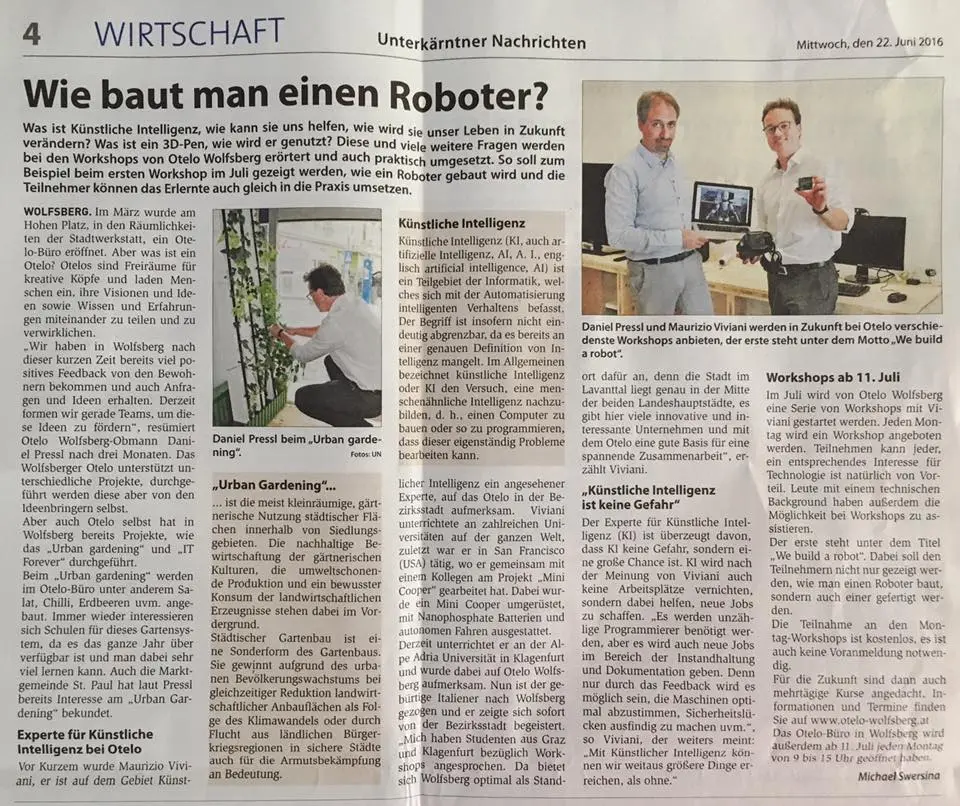
The new web: Wordpress, from blog to complex dynamic websites, 2012
Android! How to build and deploy apps, 2012
Let’s build a time machine!, 2011
Mathematics, 2011
Linear Algebra, the very basics of AI math, 2011
Physics: Time, relativity. Einstein, black holes, neutrinos, light
quantums
, 2011
Vintage: not digital astronomical photography!, 2010
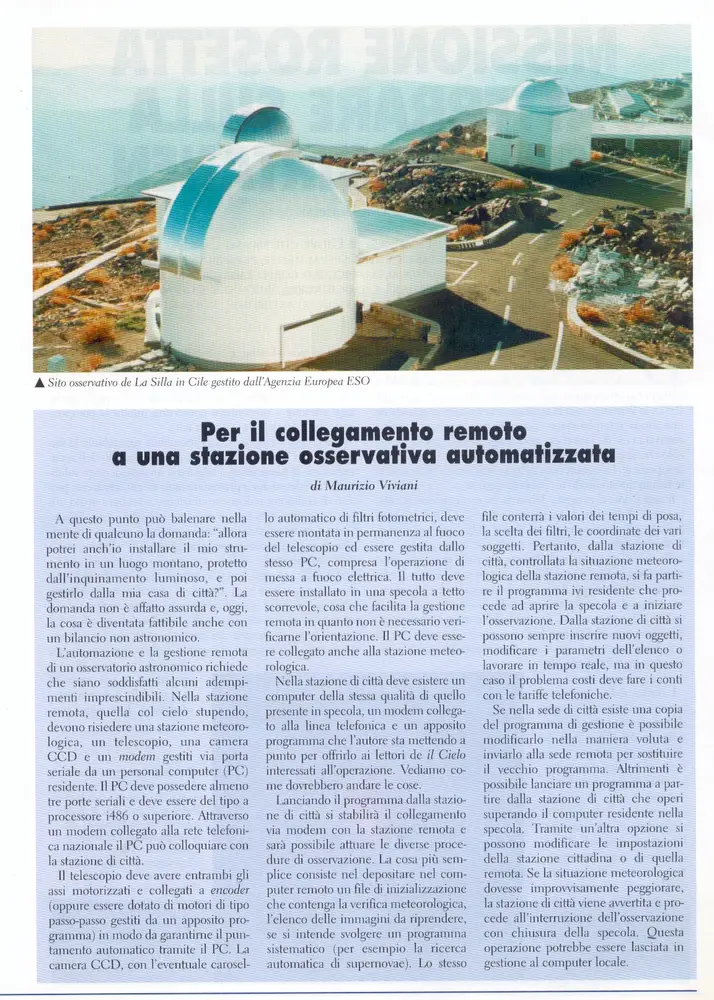
Remote astronomy, 2010
Telescoping!, 2010
Astrophysics, 2010
Astronomy: stargaze!, 2010
Digimatronics: active global recognition and safety/access control, 2009
Rovio! Programming intelligently, 2009
Arduino: AI – Advanced Arduino Programming, 2009
Arduino: my robot!, 2009
Arduino: let’s get started!, 2009
Let’s build a 3d printer!!, 2009
Linux advanced, 2009
Linux basics: let’s go linux!!, 2009
Math for future: Octave, 2009
Disaster recovery!, 2008
Introduction to programming: JAVA, 2008
Computer Vision probabilistic programming, 2008
Robonaut, 2005
Sky of the month, Era 2000
El Niño, Era 2000 Apr 1998
Plasma, Era 2000 Feb 1998
Cassini Mission to Saturn, Era 2000 Oct 1997
Space Telescope, Era 2000 Aug 1997
Mars, Era 2000 Jun 1997
Comet Hale-Bopp, comet.hq.nasa.gov Mar and Apr 1997
Remote control of an automated observatory, Il Cielo (The Sky) Jul 1996
Introduction to mountaineering, 1992
Astronomy: from the Earth to the boundaries of the Universe, digital images, 1991-1992
Comet Levy 1990,
L’Astronomia
(Astronomy) Oct 1990
Sport &
Health
I have always been in contact with mountain nature: running, skiing, climbing, kayaking, caving
exploring