









Computational biology, biomedical intelligence, environmental science and applied AI for complex living systems.
The program is presented as a scientific notebook: architecture, assumptions, applications, validation logic and visual evidence for researchers, innovators, students, professors, commercial partners and philanthropic organizations.
OpenAimed
A new multidisciplinary and OPEN science
3Chome
,
14,
PROBABILISTIC GENOMICS
MASSIVE AI-GENERATED MUTATIONS THROUGH PREDICTIVE MODELS
GENERATION OF VIRTUAL MOLECULES AND MicroRNA FOR FIGHTING VIRUSES, AMR, CANCERS,
ENHANCING HUMAN GENOMES,
DISCOVERING AND VALIDATING DRUGS
M.VIVIANI, M.BISOGNI, N.L.BRAGAZZI
OpenAimed by Transhumangene
,
Scientific collaboration model
Robotics frames bioscience programs through auditable collaboration: computational models, biological hypotheses, ethical constraints, validation protocols and multidisciplinary review are organized around measurable research objectives.
Poor distribution and high cost of higher needed AI medical education
We want to provide the utmost education in all corners of the planet without
distinction
for all human beings.
The muscular imbalance in the geographical distribution of educational resources and the too-often high cost to use them prevents most of the human resources of this planet from accessing maximum training.
This precludes the development of the natural inclinations present in all human beings and causes damage to the society in which they live in terms of the lack of development of the community itself and of higher costs to be incurred for people and the public administrations.
Why now?
Now is the time to act because we are beyond the critical breaking point for the survival of individuals and entire vital systems.
Only correct and very high educational training can reduce the difficulties in which much of the world population survives.
We absolutely must begin to change this situation thanks to an education in the sectors that are of vital importance now: the new science born from the fusion of Life Sciences, Medicine, Mathematics, Artificial Intelligence, Biomedicine.
Where we go
To give the possibility to all human beings to develop their talent and repay the vital system from which they come with a significant contribution to society to improve every quality of life.
Well-organized and efficient medical assistance everywhere, eliminating most of the diseases affecting the most disadvantaged geographical areas, the general well-being of life throughout the planet.
It is the beginning of a new human race aware of itself and fully developing all disciplines.
The obstacles
There are obstacles to be removed to achieve our mission in the multidisciplinary AI/medical field and in the area of difficulty in accessing information and resources to access them
Lack of economic and logistical resources that make it impossible to access these systems
Higher-level education pushes people to leave their home countries which lose these developing talents
Information reaches less than one-third of the world's population
What we have done so far
We are an international team of experts rooted in the multidisciplinary created from research, academic and private backgrounds.
We presented our mission in Davos at the World Economic Forum 2020: sharing AI-driven benefits with everyone.
We have developed this discipline and organized the training course as illustrated in the following pages.
OPENAIMED Syllabus
FH Carinthia
The university of applied science in Carinthia has a far-reaching fundament in different expertise. The study program focuses on three sections
Engineering & IT, Health, and Management.
Also, they have some unique programs in Innovation and a center for further education.
https://www.fh-kaernten.at/en/
https://www.lakeside-labs.com/
Medical University Graz
FH-PROF. MAG.A DR.IN
ASTRID PAULITSCH-FUCHS
Biomedical Analyze
DI Dr. Erich Alois Hartlieb
Entrepreneurship Mastermind
Priv.
DGernot
Zarfel
Microbiology
oz
. Mag.
Dr.rer.nat
Doz
Mag.rer.nat
. Dr.
Klemens Kittinger
ACADEMIC BIO-Digital Engineering: OPENAIMED
TU Wien
At TU Wien, we have been conducting research, teaching and learning under the motto 'Technology for people' for over 200 years. TU Wien has evolved into an open academic institution where discussions can happen, opinions can be voiced and arguments will be heard. Although everyone may have different individual philosophies and approaches to life, the staff, management personnel and students at TU Wien all promote open-mindedness and tolerance. Also
they have some special programs in Innovation and a center for further education. In Vienna has the university different places and a renowned worldwide reputation on the technical research field.
https://www.tuwien.at/en/tu-wien/
https://www.tuwien.at/en/tu-wien/about-tu-wien/facts-and-figures/rankings/
https://www.imw.tuwien.ac.at/cps/team/sebastian_schlund/
FH Technikum Wien
With around 13,000 graduates thus far and 4,400 students, the University of Applied Sciences
Technikum
Wien is Austria’s only purely technical university of applied sciences. The educational offerings consist of 12 bachelor’s and 18 master’s degree programs, which are offered as full-time, part-time and/or distance study programs. Four degree programs are taught in English. The educational offerings are based on a solid scientific foundation and are also practice-oriented. At UAS
Wien, emphasis is not only placed on providing a high-quality technical education, but also on subjects with a focus on business and personal development. Close ties and collaborations with business and industry give students and graduates excellent career opportunities. The combination of theory and practical application is of central importance in both research and
instruction.The
research and development activities at UAS
Wien have grown significantly in recent years and currently concentrate on our research focuses: Embedded Systems & Cyber-Physical Systems,
Renewable Urban Energy Systems,
Secure Services, eHealth & Mobility,
Tissue Engineering & Molecular Life Science Technologies,
Automation & Robotics.
https://www.technikum-wien.at/en/
Univ.-Prof. Dr.-Ing. Dipl.-Ing.
Sebastian Schlund
Cyber
Physical
Systems
York University
York University (French
Université
York) is a public research university in Toronto, Ontario, Canada. It is Canada's third-largest university and it has approximately 55,700 students, 7,000 faculty and staff, and over 325,000 alumni worldwide.
A community of changemakers working to create a better future: York believes that our diverse community, excellent learning and research, and commitment to collaboration allows us to address complex global challenges to create positive change in the local and global communities we serve. Our staff, students and faculty are passionate about building a more innovative, just and sustainable world.
https://www.yorku.ca/
https://liam.lab.yorku.ca/person/dr-nicola-luigi-bragazzi/
Dr. Nicola Luigi
Bragazzi
BSc
, MD, PhD,
MSc
, MPH
articles
4235
citations
, H-index 30 (
Scopus
Reviewer
for
scholarly
journals
National/International
Prizes
Young Knight
of
the
Italian
Republic
2005,
Guidoniani
Prize 2018, USERN Prize 2019, MAI Prize 2020
International Journal
Functional
Nutrition, Editor
Medicina
Section
Board Member and Editorial Board Member
Environmental Research and Public Health,
Board Member
Current
Autoimmunity
, Editorial Board Member
Epidemiologia
Laboratory
Industrial and Applied Mathematics (LIAM)
Department
Mathematics and Statistics
Toronto, ON, Canada
Proofs of concepts and case study COVID-19
TransHumanGene, Drugs and Vaccines, Artificial Intelligence and Supercomputing
”, by
Nicola Luigi Bragazzi, Maurizio Bisogni and Maurizio Viviani
TransHumanGene and SARS-CoV-2: navigating the mutational landscape by means of Artificial Intelligence and Supercomputing
”, by Nicola Luigi Bragazzi
, Maurizio Bisogni and Maurizio Viviani
TransHumanGene, Senescence, Artificial Intelligence and Supercomputing
” by Nicola Luigi Bragazzi
TransHumanGene, Cancer, Artificial Intelligence and Supercomputing
” by
“How Big Data and Artificial Intelligence Can Help Better Manage the COVID-19 Pandemic”
by Nicola Luigi Bragazzi,
Haijiang
Dai, Giovanni Damiani, Masoud
Behzadifar
, Mariano Martini and
Jianhong
Wu
Int. J. Environ. Res. Public Health 2020, 17(9), 3176; doi.org/10.3390/ijerph17093176
Abstract
Medical education refers to education and training delivered to medical students in order to become a practitioner. In recent decades, medicine has been radically transformed by scientific and computational/digital advances-including the introduction of new information and communication technologies, the discovery of DNA, and the birth of genomics and post-genomics super-specialties (transcriptomics, proteomics,
interactomics
, and metabolomics/
metabonomics
, among others)-which contribute to the generation of an unprecedented amount of data, so-called 'big data'. While these are well-studied in fields such as medical research and methodology, translational medicine, and clinical practice, they remain overlooked and understudied in the field of medical education. For this purpose, we carried out an integrative review of the literature. Twenty-nine studies were retrieved and synthesized in the present review. Included studies were published between 2012 and 2021. Eleven studies were performed in North America: specifically, nine were conducted in the USA and two studies in Canada. Six studies were carried out in Europe: two in France, two in Germany, one in Italy, and one in several European countries. One additional study was conducted in China. Eight papers were commentaries/theoretical or perspective articles, while five were designed as a case study. Five investigations exploited large databases and datasets, while five additional studies were surveys. Two papers employed visual data analytical/data mining techniques. Finally, other two papers were technical papers, describing the development of software, computational tools and/or learning environments/platforms, while two additional studies were literature reviews (one of which being systematic and bibliometric).The following nine sub-topics could be identified: (I) knowledge and awareness of big data among medical students; (II) difficulties and challenges in integrating and implementing big data teaching into the medical syllabus; (III) exploiting big data to review, improve and enhance medical school curriculum; (IV) exploiting big data to monitor the effectiveness of web-based learning environments among medical students; (V) exploiting big data to capture the determinants and signatures of successful academic performance and counteract/prevent drop-out; (VI) exploiting big data to promote equity, inclusion, and diversity; (VII) exploiting big data to enhance integrity and ethics, avoiding plagiarism and duplication rate; (VIII) empowering medical students, improving and enhancing medical practice; and, (IX) exploiting big data in continuous medical education and learning. These sub-themes were subsequently grouped in the following four major themes/topics: namely, (I) big data and medical curricula; (II) big data and medical academic performance; (III) big data and societal/bioethical issues in biomedical education; and (IV) big data and medical career. Despite the increasing importance of big data in biomedicine, current medical curricula and syllabuses appear inadequate to prepare future medical professionals and practitioners that can leverage on big data in their daily clinical practice. Challenges in integrating, incorporating, and implementing big data teaching into medical school need to be overcome to facilitate the training of the next generation of medical professionals. Finally, in the present integrative review, state-of-art and future potential uses of big data in the field of biomedical discussion are envisaged, with a focus on the still ongoing "Coronavirus Disease 2019" (COVID-19) pandemic, which has been acting as a catalyst for innovation and digitalization.
Big Data for Biomedical Education with a Focus on the COVID-19 Era: An Integrative Review of the Literature
https://pubmed.ncbi.nlm.nih.gov/34501581/
Rola
Khamisy
Farah
Peter
Gilbey
Leonardo B Furstenau
Michele Kremer
Sott
Raymond Farah
Maurizio Viviani
Maurizio Bisogni
Jude
Dzevela
Kong
Rosagemma
Ciliberti
Nicola Luigi Bragazzi
“Artificial neural networks can be effectively used to model changes of intracranial pressure (ICP) during spinal surgery using different non invasive ICP surrogate estimators” by
Watad
A, Bragazzi NL,
Bacigaluppi
S,
Amital
H,
S, Sharif K,
Bisharat
B, Siri A,
Mahamid
A, Abu Ras H, Nasr A,
Bilotta
F,
Robba
C,
Adawi
M. J
Neurosurg
Sci. 2018 Feb 23.
doi
10.23736/S0390-5616.18.04299-6
“Artificial neural networks allow response prediction in squamous cell carcinoma of the scalp treated with radiotherapy” by Damiani G,
Grossi
E,
Berti
E, Conic RRZ, Radhakrishna U,
Pacifico
Piccinno
R, Linder D. J Eur
Acad
Dermatol
Venereol
. 2020 Jun;34(6):1369-1373.
“How Big Data and Artificial Intelligence Can Help Better Manage the COVID-19 Pandemic” by Bragazzi NL, Dai H, Damiani G,
M, Martini M, Wu J. Int J Environ Res Public Health. 2020 May 2;17(9):3176.
“From Rheumatology 1.0 to Rheumatology 4.0 and beyond: the contributions of Big Data to the field of rheumatology” by Bragazzi NL, Damiani G, Martini M.
Mediterr
Rheumatol
. 2019 Mar;30(1):3-6.
SleepOMICS
How Big Data Can Revolutionize Sleep Science” by Bragazzi NL,
Guglielmi
O,
Garbarino
S. Int J Environ Res Public Health. 2019 Jan 21;16(2):291.
"Systematic review and meta-analysis of
case-control
studies from 7,000 COVID-19 Pneumonia patients suggests a beneficial impact of Tocilizumab with benefit most evident in non-corticosteroid Exposed Subjects" by Abdulla
, Charlie
Bridgewood
, Muhammad Mansour,
Naim
Mahroum
, Matteo
Riccò
, Ahmed Nasr, Amr Hussein, Omer Gendelman, Yehuda
Shoenfeld
Merav
Lidar, Howard
Amita
Wu, Dennis
McGonagle
SSRN Papers abstract number 3642653
"Rationale for Evaluating PDE4 Inhibition for Mitigating against Severe Inflammation in COVID-19 Pneumonia and Beyond" by
C, Damiani G, Sharif K,
A,
Bragazzi NL
Quartuccio
L,
Savic
D.
Isr
Med Assoc J. 2020 Jun;22(6):335-339. PMID: 32558435
"Canada needs to rapidly escalate public health interventions for its COVID-19 mitigation strategies" by
Scarabel
Pellis
, Wu J. Infect Dis Model. 2020;5:316-322.
10.1016/j.idm.2020.03.004.
Epub
2020 Mar 31. PMID: 32518882
"Modeling the impact of mass influenza vaccination and public health interventions on COVID-19 epidemics with limited detection capability" by Li Q, Tang B,
, Xiao Y, Wu J. Math
Biosci
. 2020 Jul;325:108378.
10.1016/j.mbs.2020.108378.
2020 May 16. PMID: 32507746
"Quantifying the role of social distancing, personal protection and case detection in mitigating COVID-19 outbreak in Ontario, Canada" by Wu J, Tang B,
, Nah K, McCarthy Z. J Math Ind. 2020;10(1):15.
10.1186/s13362-020-00083-3.
2020 May 26. PMID: 32501416
"Effects of COVID-19 Home Confinement on Eating
Behaviour
and Physical Activity: Results of the ECLB-COVID19 International Online Survey" Ammar A, Brach M,
Trabelsi
K,
Chtourou
Boukhris
Masmoudi
Bouaziz
B,
Bentlage
E, How D, Ahmed M, Müller P, Müller N,
Aloui
Hammouda
Paineiras-Domingos
LL,
Braakman
Jansen A, Wrede C,
Bastoni
S, Pernambuco CS,
Mataruna
L, Taheri M,
Irandoust
Khacharem
Chamari
K, Glenn JM, Bott NT,
Gargouri
Chaari
Batatia
H, Ali GM, Abdelkarim O,
Jarraya
M, Abed KE,
Souissi
N, Van
Gemert-Pijnen
L, Riemann BL, Riemann L,
Moalla
W, Gómez-Raja J, Epstein M,
Sanderman
R, Schulz SV,
Jerg
A, Al
Horani
R, Mansi T,
Jmail
M, Barbosa F, Ferreira-Santos F,
Šimunič
Pišot
R,
Gaggioli
A, Bailey SJ,
Steinacker
JM,
Driss
T,
Hoekelmann
A. Nutrients. 2020 May 28;12(6):E1583.
10.3390/nu12061583. PMID: 32481594
"Point-of-Care Diagnostic Tests for Detecting SARS-CoV-2 Antibodies: A Systematic Review and Meta-Analysis of Real-World Data" by
M, Ferraro P,
Gualerzi
G,
Ranzieri
S, Henry BM, Said YB,
Pyatigorskaya
NV,
Nevolina
E, Wu J,
, Signorelli C. J Clin Med. 2020 May 18;9(5):1515.
10.3390/jcm9051515. PMID: 32443459
"De-Escalation by Reversing the Escalation with a Stronger Synergistic Package of Contact Tracing, Quarantine, Isolation and Personal Protection: Feasibility of Preventing a COVID-19 Rebound in Ontario, Canada, as a Case Study" by Tang B,
, McCarthy Z, Glazer M, Xiao Y, Heffernan JM,
Asgary
A, Ogden NH, Wu J. Biology (Basel). 2020 May 16;9(5):100.
10.3390/biology9050100. PMID: 32429450
"SARS-CoV-2 infection and air pollutants: Correlation or causation?" by
M,
Balzarini
Corradi
M. Sci Total Environ. 2020 Sep 10;734:139489.
10.1016/j.scitotenv.2020.139489.
2020 May 16. PMID: 32425256
"Stop playing with data: there is no sound evidence that
Bacille
Calmette
Guérin
may avoid SARS-CoV-2 infection (for now)" by
. Acta Biomed. 2020 May 11;91(2):207-213.
10.23750/abm.v91i2.9700. PMID: 32420947
"Point-of-Care diagnostic of SARS-CoV-2: knowledge, attitudes, and perceptions (KAP) of medical workforce in Italy" by
F, Signorelli C. Acta Biomed. 2020 May 11;91(2):57-67.
10.23750/abm.v91i2.9573. PMID: 32420926
"COVID-19 knowledge prevents biologics discontinuation: Data from an Italian multicenter survey during RED-ZONE declaration" by
Malagoli
P,
Kridin
Pigatto
P, Damiani G. Dermatol
Ther
. 2020 May 16:e13508.
10.1111/dth.13508. Online ahead of print. PMID: 32415727
"Continuous hydroxychloroquine or colchicine therapy does not prevent infection with SARS-CoV-2: Insights from a large healthcare database analysis" by Gendelman O,
Chodick
G.
Autoimmun
Rev. 2020 Jul;19(7):102566.
10.1016/j.autrev.2020.102566.
2020 May 5. PMID: 32380315
"Ensuring adequate health financing to prevent and control the COVID-19 in Iran" by
Ghanbari
MK, Bakhtiari A,
. Version 2. Int J Equity Health. 2020 May 6;19(1):61.
10.1186/s12939-020-01181-9. PMID: 32375787
"How Big Data and Artificial Intelligence Can Help Better Manage the COVID-19 Pandemic" by
, Dai H, Damiani G,
10.3390/ijerph17093176. PMID: 32370204
"Biologics increase the risk of SARS-CoV-2 infection and hospitalization, but not ICU admission and death: Real-life data from a large cohort during red-zone declaration" by Damiani G,
P. Dermatol
. 2020 May 1:e13475.
10.1111/dth.13475. Online ahead of print. PMID: 32356577
"Novel Coronavirus Infection (COVID-19) in Humans: A Scoping Review and Meta-Analysis" by Borges do Nascimento IJ,
Cacic
N,
Abdulazeem
HM, von Groote TC,
Jayarajah
U,
Weerasekara
I,
Esfahani
MA, Civile VT,
Marusic
Jeroncic
Carvas
Junior N,
Pericic
TP,
Zakarija-Grkovic
Meirelles
Guimarães
SM,
Luigi Bragazzi N
, Bjorklund M, Sofi-Mahmudi A,
Altujjar
M, Tian M,
Arcani
DMC,
O'Mathúna
DP,
Marcolino
MS. J Clin Med. 2020 Mar 30;9(4):941.
10.3390/jcm9040941. PMID: 32235486
"The effectiveness of quarantine and isolation determine the trend of the COVID-19 epidemics in the final phase of the current outbreak in China" by Tang B, Xia F, Tang S,
, Li Q, Sun X, Liang J, Xiao Y, Wu J. Int J Infect Dis. 2020 Jun;95:288-293.
10.1016/j.ijid.2020.03.018.
2020 Apr 17. PMID: 32171948
"An updated estimation of the risk of transmission of the novel coronavirus (2019-nCov)" by Tang B,
, Li Q, Tang S, Xiao Y, Wu J. Infect Dis Model. 2020 Feb 11;5:248-255.
10.1016/j.idm.2020.02.001.
eCollection
2020. PMID: 32099934
"Estimation of the Transmission Risk of the 2019-nCoV and Its Implication for Public Health Interventions" by Tang B, Wang X, Li Q,
, Tang S, Xiao Y, Wu J. J Clin Med. 2020 Feb 7;9(2):462.
10.3390/jcm9020462. PMID: 32046137
The service
includes
module
courses
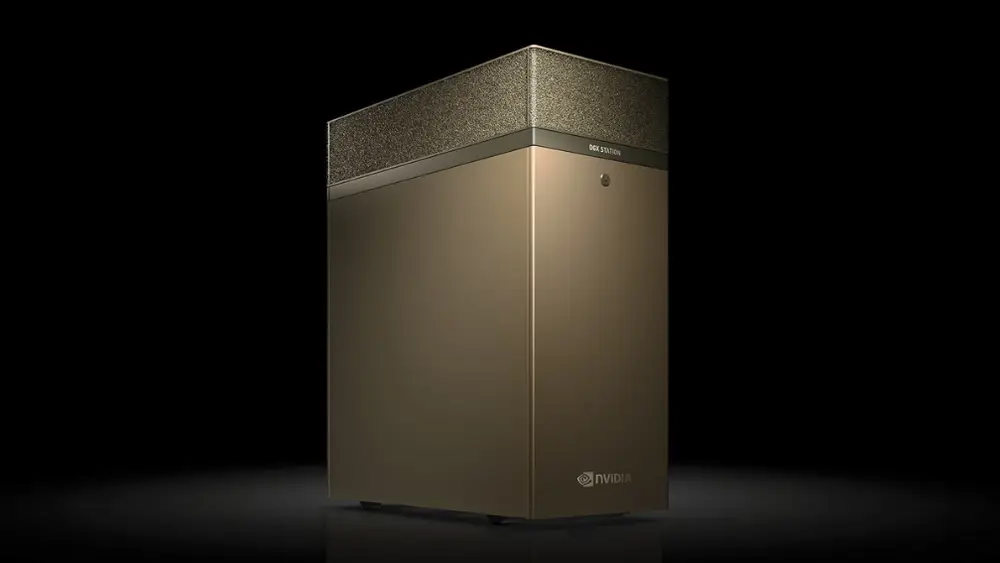
, workshops, and access to a supercomputer Nvidia DGX1
Our
Teaching
staff supports the learning
path
and
provides
all
studying
material
If
fully
financed
, we can
become
a Non Profit
entity
Lecturers
Structure
Total Cost
1,200,000
800,000
2,000,000
Students
Online credits
Total Revenue
1,600,000
400,000