
Water infrastructure, modular treatment, AI supervision, field deployment and scientific validation for resilient freshwater missions.
The program is presented as a scientific notebook: architecture, assumptions, applications, validation logic and visual evidence for researchers, innovators, students, professors, commercial partners and philanthropic organizations.
Aqua
Vitaque
Full System
Innovation Plan
Details on all innovations within the system including a comparison to currently available state-of-the-art technology.
Each innovation is listed separately and highlights the aspect of the desalination process it is focused on.
Innovation 1
Forward
Osmosis
(FO)
Desalination
Premise: Aqua
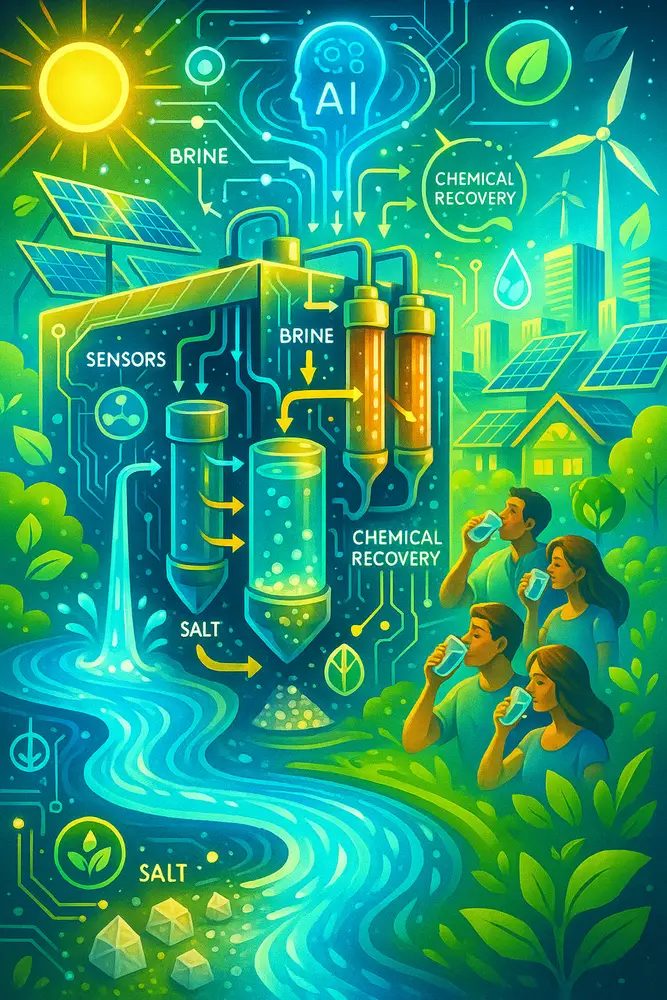
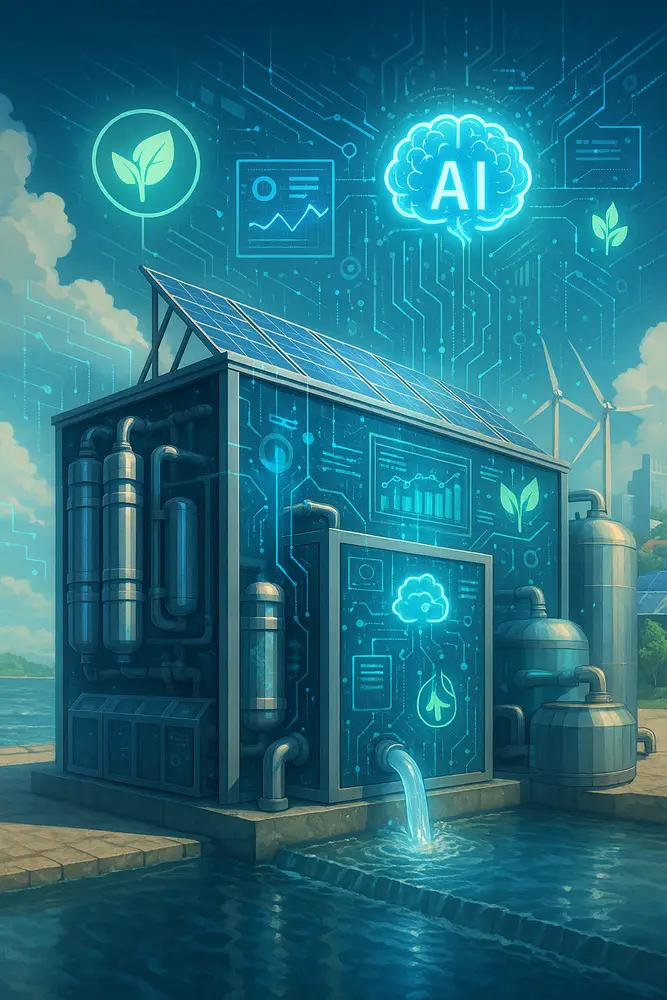
imagines a future where everyone has easy access to safe water. The proposed system employs new science, artificial intelligence, and clean energy to install a water system that self-repairs and functions in small towns and large cities.
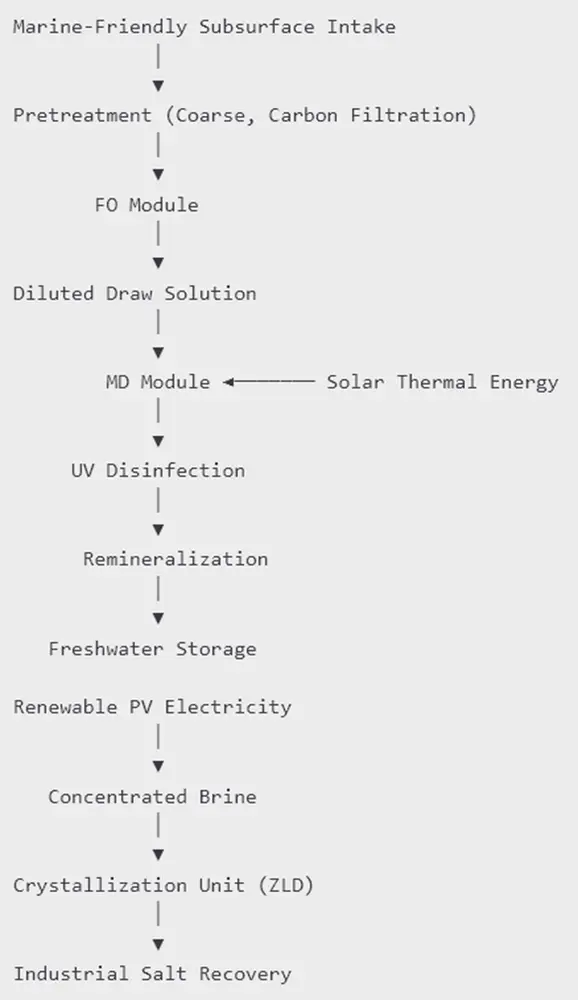
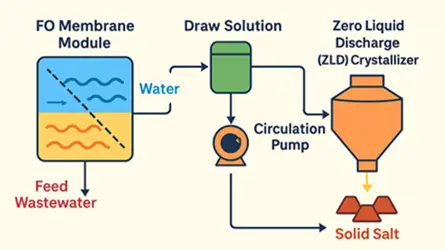
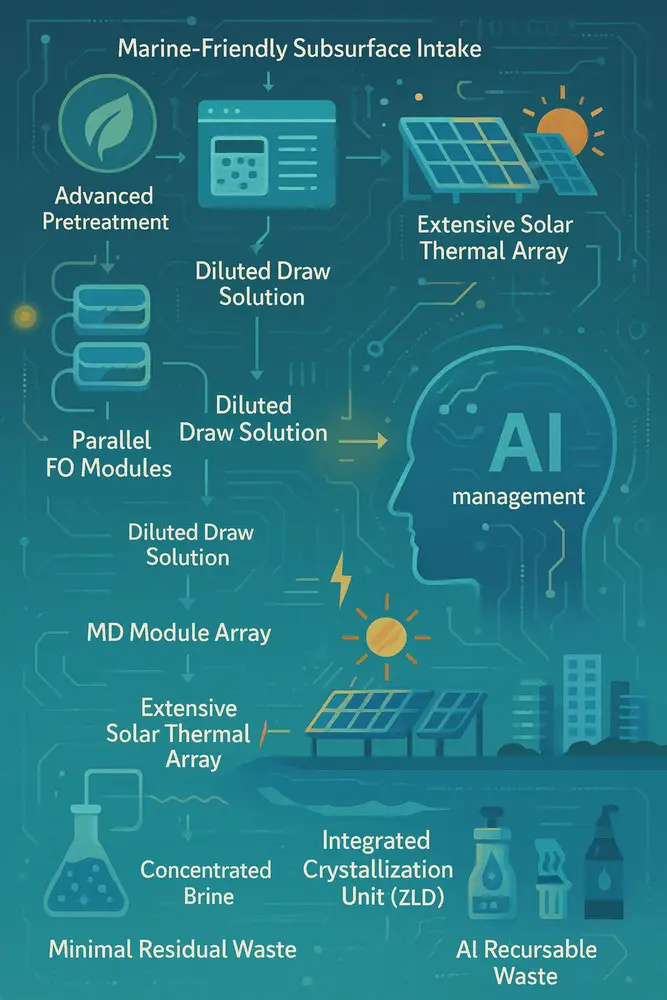
Our primary innovation is the integration of Forward Osmosis (FO) technology. Unlike traditional Reverse Osmosis (RO) methods, which require high pressure and substantial energy, FO leverages natural osmotic pressure gradients to draw freshwater through semi-permeable membranes. This drastically reduces energy consumption (≤1.5 kWh/m³ electrical energy), significantly less than RO systems (approximately 3-4 kWh/m³). FO membranes are designed to be high-flux and low-fouling, extending membrane lifespan and reducing maintenance costs. This simplicity and lower operational expense provide an affordable and sustainable solution compared to state-of-the-art RO plants.
Innovation 2: Membrane Distillation (MD) with Solar Thermal Integration
Our second innovation involves coupling FO with Membrane Distillation (MD), powered primarily by renewable solar thermal energy. MD utilizes solar-generated heat to evaporate water across a hydrophobic membrane, efficiently separating freshwater from salts and contaminants. The solar-driven MD process further reduces reliance on electricity and fossil fuels, significantly lowering operational costs and enhancing environmental sustainability. This technology contrasts favorably against current thermal desalination methods, which typically rely heavily on fossil fuels and thus incur higher economic and ecological costs.
Innovation 3: Zero Liquid
Discharge
(ZLD) and Brine Management
The Aqua
system
includes
an innovative Zero Liquid
(ZLD) component
that
prevents
harmful
brine
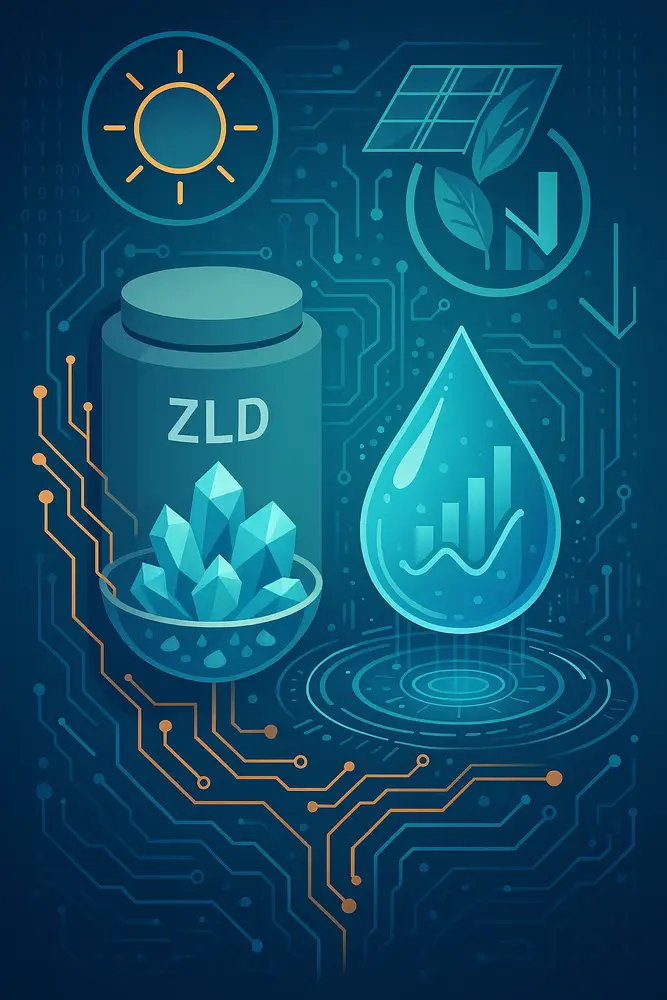
Utilizing
crystallization
techniques, the system
recovers
valuable
minerals
from brine,
transforming
waste
into
usable
industrial
resources
This
approach
eliminates
the
environmental
hazards
commonly
associated
with
conventional
methods
concentrated
marine
ecosystems
. By
creating
economically
viable
by-products,
our
ZLD
innovation
enhances
sustainability
and
introduces
an
additional
revenue stream,
reducing
overall
operational
costs.
Innovation 4: AI
Driven
Predictive
Management
Our AI platform continuously monitors and optimizes the desalination process in real-time, significantly improving system efficiency and reliability. Our AI management reduces downtime and operational overheads by predicting maintenance needs, managing energy consumption dynamically, and optimizing resource recovery processes. Compared to current industry-standard automation systems, our predictive AI platform offers superior efficiency and cost-effectiveness, ensuring high uptime (>85%) and minimizing manual intervention.
In summary, our combined approach of Forward Osmosis, Solar-Powered Membrane Distillation, Zero Liquid Discharge, and AI optimization offers a unique and cost-effective solution significantly superior to conventional desalination technologies in energy efficiency, environmental sustainability, and economic viability.
Innovation 5
Intelligence, DNA
identification
, and Complete Automation
In compliance with WHO regulations regarding germs and bacteria for drinking water,
Omixos
is a fully autonomous system capable of detecting germs and bacteria DNA traces in water. Each test feeds data into smart libraries, allowing the system to forecast future contamination risks through predictive modeling. The system can thus dynamically adjust its cleaning strategies without human intervention. The result is an innovative water management platform that is active, adaptive, and autonomous from a biological perspective. In addition,
’ biological detection capability enhances drinking water safety by providing early warning against waterborne pathogens, offering significant public health benefits for end users.
System Design and Development Overview
System Phases and Overview
Testing Phase
will
be
implemented
at
laboratory
scale
during
initial
testing
phase
producing
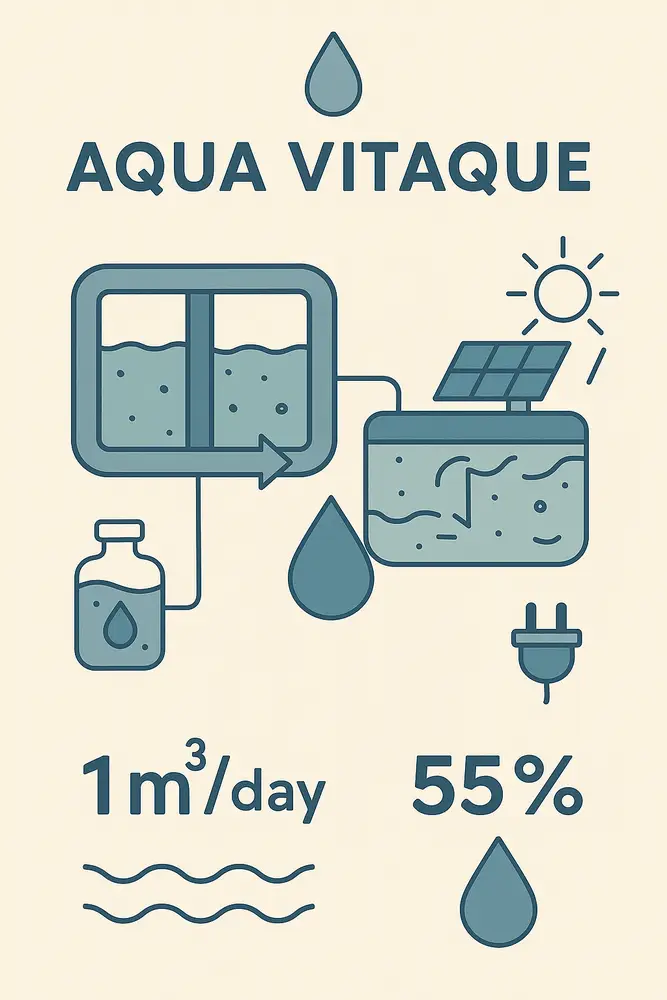
1 m³/day
freshwater
from
synthetic
seawater
(ASTM D1141 standard).
small-scale
prototype
validate
fundamental
operations
including
(FO) and Membrane
Distillation
(MD)
processes
using
minimal energy inputs
powered
by
renewable
solar sources.
Primary
objectives
include energy
efficiency
(<1.5 kWh/m³
electric
) and
achieving
least
55% water recovery.
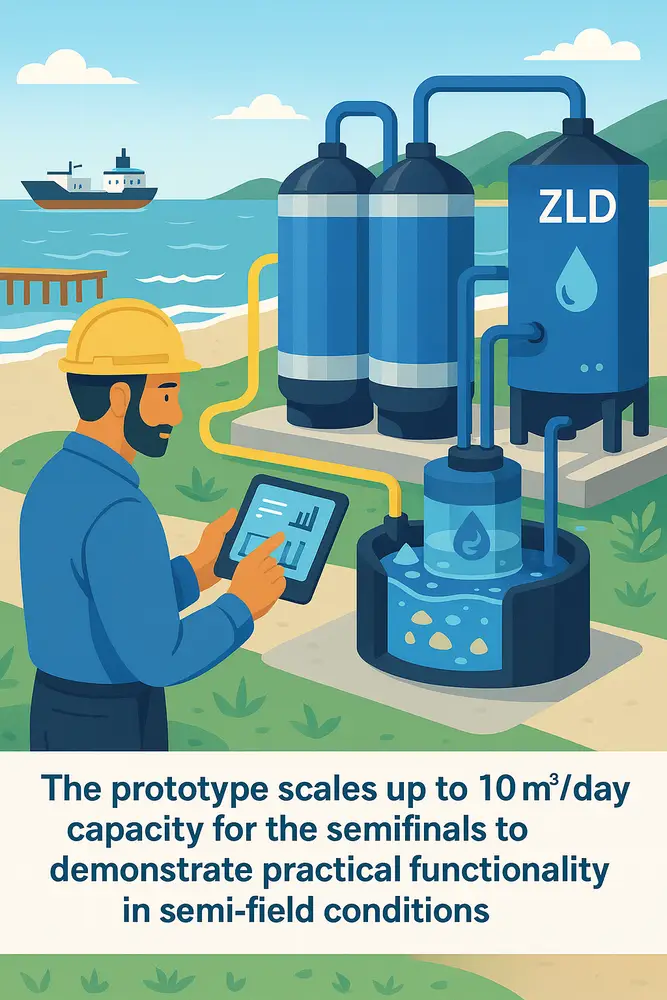
The prototype scales up to a 10 m³/day capacity for the semifinals to demonstrate practical functionality in semi-field conditions. The system will be installed at a coastal site to verify performance under realistic marine intake conditions. This stage will introduce an integrated Zero Liquid Discharge (ZLD) system for brine management, recovering valuable salts through crystallization, thus verifying economic feasibility and sustainability.
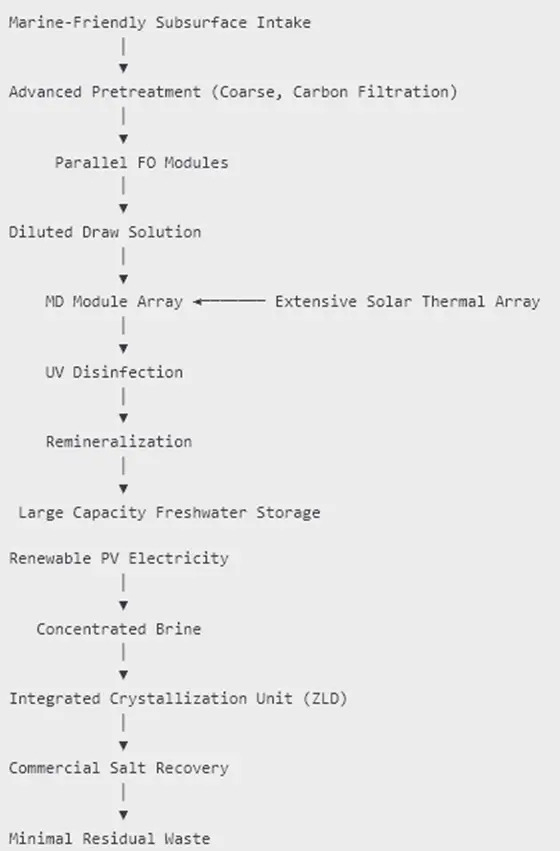
A fully operational demonstration unit with a capacity of 100 m³/day will be established. The primary aim is to validate scalability, operational reliability (>85% uptime), and comprehensive sustainability management, including marine-friendly intake, full brine recovery, and minimized environmental impact. Continuous performance optimization driven by integrated AI management systems will be demonstrated, maximizing operational efficiency and reducing total lifecycle costs.
Alignment
Marine-Friendly
Intake
Design
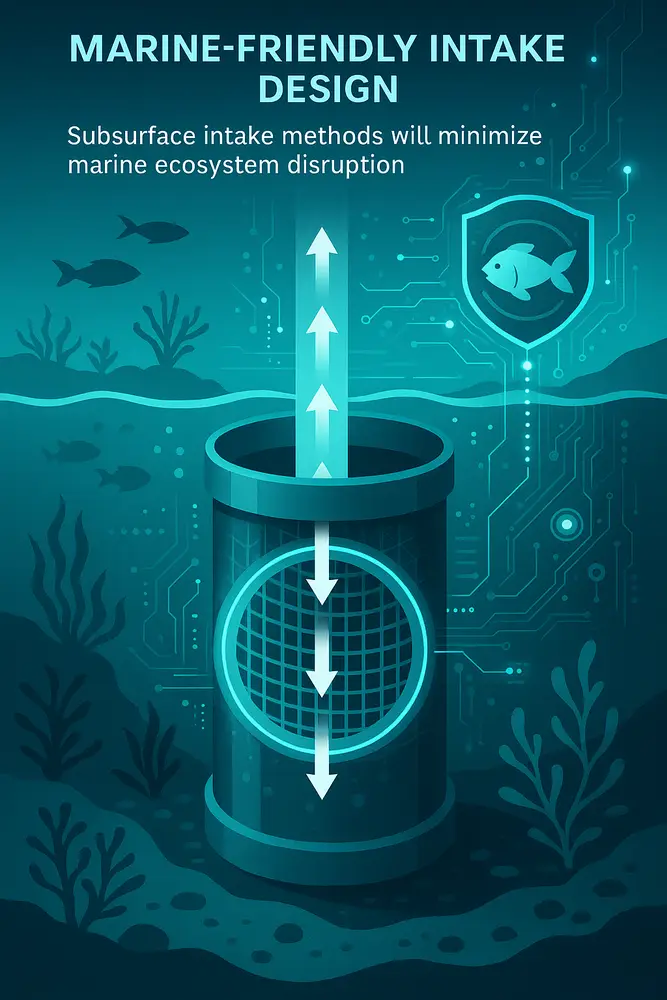
Subsurface
minimize
ecosystem
disruption. A
carefully
designed
mesh
filtration
protect
local
marine life,
aligning
conservation
guidelines
Brine Resource Recovery: The ZLD component
significantly
minimizes
impact by
recovering
crystallizing
salts
converting
marketable
Energy
and GHG
Emissions
solar
thermal
energy powers the system,
drastically
greenhouse
gas
compared
to
traditional
. The
targeted
electrical
usage
is
below
1.5 kWh/m³, far
outperforming
current
reverse
technologies
Materials Lifecycle: High-quality, recyclable, and durable materials are selected for all system components to ensure extended service life (10+ years) and reduced environmental footprint.
System Footprint: Compact modular design ensures minimal physical footprint (target: ≤50 m² per 100 m³/day capacity), making deployment feasible even in space-constrained locations.
Water Treatment
Pretreatment
Coarse
for the
removal
of large
particulates
Activated
carbon
remove
organic
compounds
Core Technology
uses
natural
osmotic
pressure,
consumption
Membrane
employs
energy to separate pure water from brine.
Post-Treatment
Remineralization
calcium
magnesium
for water
quality
optimization
UV
disinfection
ensure
microbiological
safety
Major System Components
FO Membrane Module
MD Membrane Module with Solar Thermal Collectors
Unit (ZLD
module
Solar Energy System (
photovoltaic
panels)
AI
Control and
Unit
Compact modular
containment
units
Dimensions
Qualified
Teams Testing): 2.0 m x 1.5 m x 1.5 m
Semi-field Pilot (
Semifinals
): 4.0 m x 2.0 m x 2.5 m
Full-scale
Demonstration
Unit (
Finals
): 8.0 m x 2.5 m x 2.5 m
Schematics and Diagrams
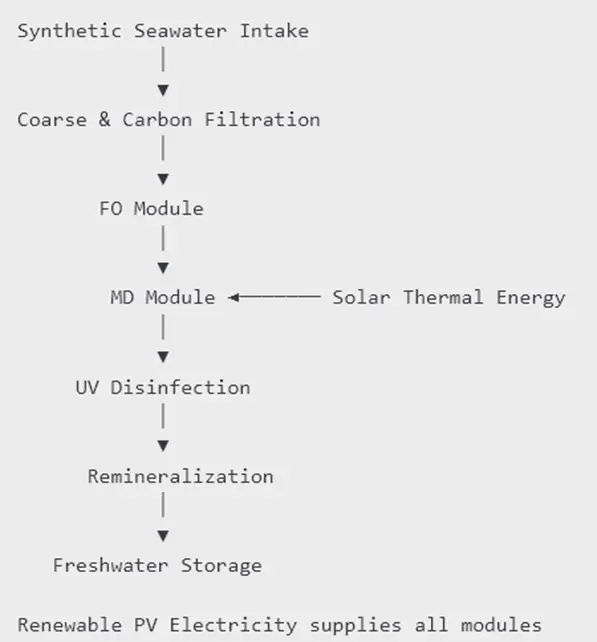
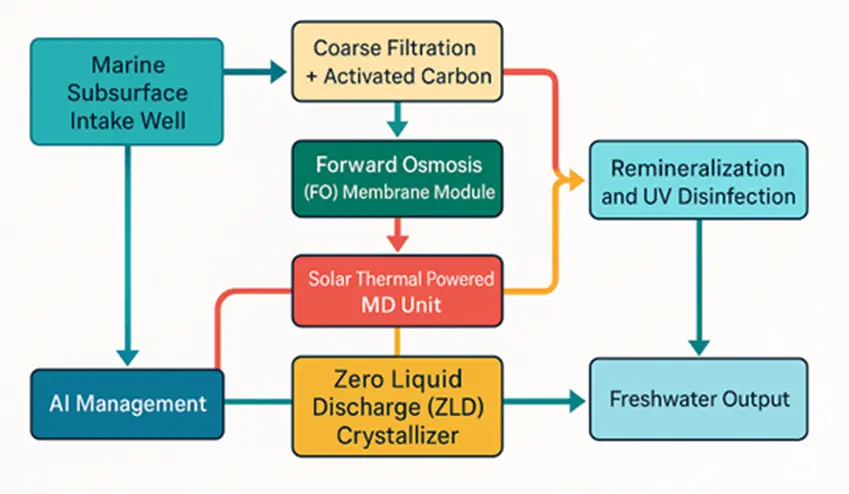
Schematics illustrate system configurations, showing interconnections among components such as the intake, FO module, MD unit, crystallization system, and renewable energy modules.
Development Schedule
Energy Consumption and Sources
Cost Estimation
Intake Process
Outtake and Discharge Plans
Moonshot
Award
Details
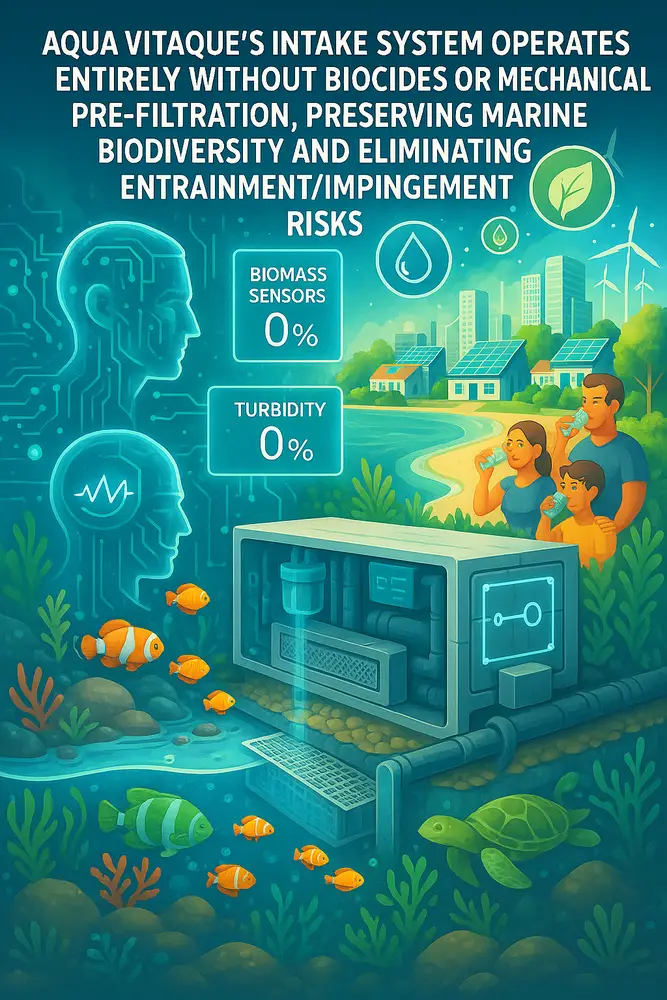
To meet and exceed the Finals-level target of <5% biomass content and approach near-zero marine impact,
AquaVitaque’s
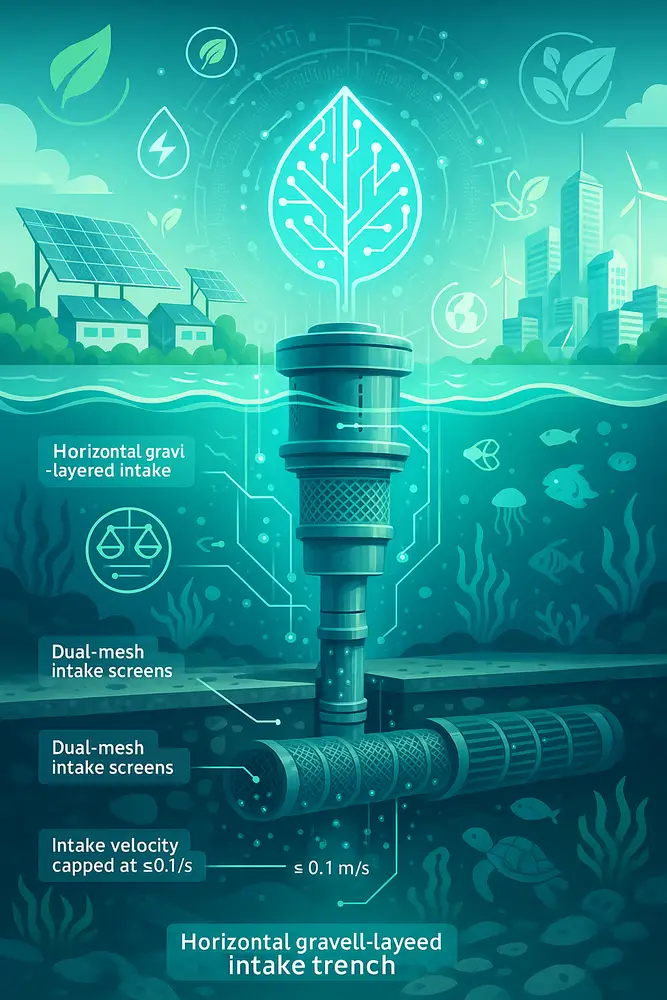
A horizontal gravel-layered intake trench is installed below the seabed and is designed to naturally pre-filter intake water.
Dual-mesh intake screens are integrated into the trench, with micro-mesh protection to minimize impingement.
Intake velocity capped at ≤0.1 m/s, ensuring negligible suction impact and eliminating harm to marine organisms.
operates
entirely
without
biocides
or
mechanical
pre-filtration
preserving
biodiversity
eliminating
entrainment
impingement
risks.
Performance
monitored
via real-time
turbidity
biomass
sensors
before
any
step.
We
aim
demonstrate
content
approaching
0% in
conditions
, setting a benchmark for
ecological
Resource
Circularity
& Brine Management
propose a
fully
integrated
zero
liquid
(ZLD) system
focused
on
maximizing
recovery from
valorizing
extracted
architecture
Sequential
FO and MD treatment
modules
concentrate brine in a
staged
manner
losses
low-grade solar
energy to
extract
salt
other
crystallizable
Sensor-guided AI loop to route brine selectively into different crystallization chambers based on chemical profile.
In Semifinals, we target ≥50% resource recovery, scaling to ≥70% in Finals, supported by
Lithium and magnesium extraction as byproducts.
A techno-economic model showing profitability via salt reuse, chemical recovery, and avoided disposal costs.
Our design is circular by nature and commercial by strategy — aiming for environmentally and financially sustainable desalination.
Step
Change
hybrid FO–MD desalination train is optimized to push the energy boundary closer to the thermodynamic minimum (1.06 kWh/m³)
The Forward Osmosis module removes the need for high-pressure pumps, dramatically reducing electrical load.
A solar thermal MD unit recycles heat from solar collectors and waste heat loops, without the need for compressors or external boilers.
Intelligent
control by an AI
based
energy manager
dynamically
balances flow, temperature, and
salinity
avoid
entropy
Key
Metrics
performance: ~1.2 kWh/m³
55% recovery.
Target
performance: ≤1.1 kWh/m³,
scalable
repeatable
configuration
outperforms
typical
(RO)
benchmarks
while
remaining
modular and solar
compatible
Minimal
Physical
System Footprint
Our system is engineered as a containerized modular platform that can be deployed in land-constrained areas and relocated with minimal overhead
Stacked vertical modules for FO, MD, and ZLD treatment stages allow footprint compaction.
Integrated tank-wall and skid-frame design reduces structural redundancy and uses <100 m²/MLD.
Electronics and AI controllers are embedded in the module walls or under-frame cabinetry.
Finals Target
≤100 m²/MLD achieved via
Bright piping layout (3D optimized routing).
Shared membranes between stages.
Foldable preassembled subsystems.
This allows scalable deployment in ports, island grids, and remote communities — even on barges or rooftops.